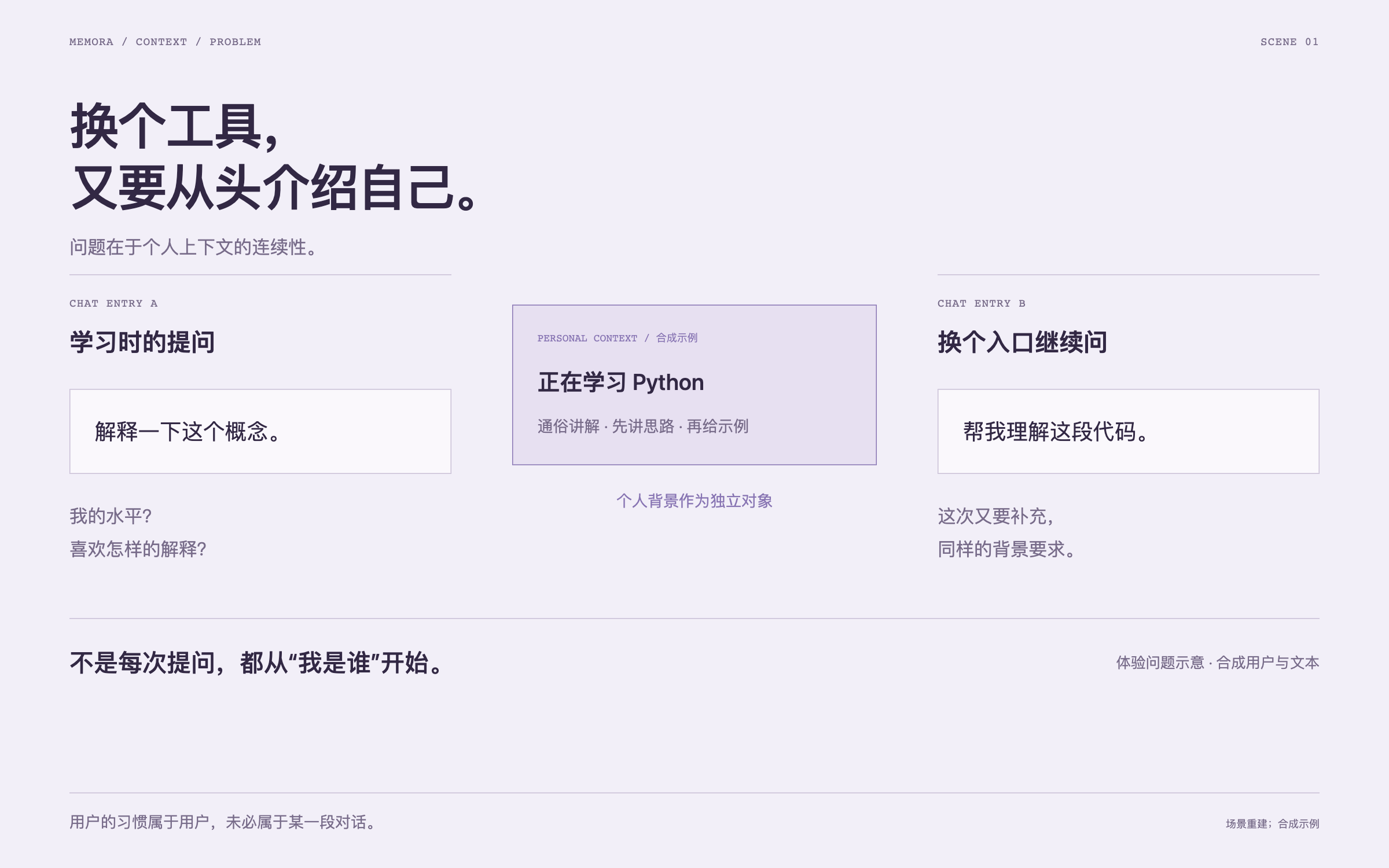
Introducing yourself again after switching tools
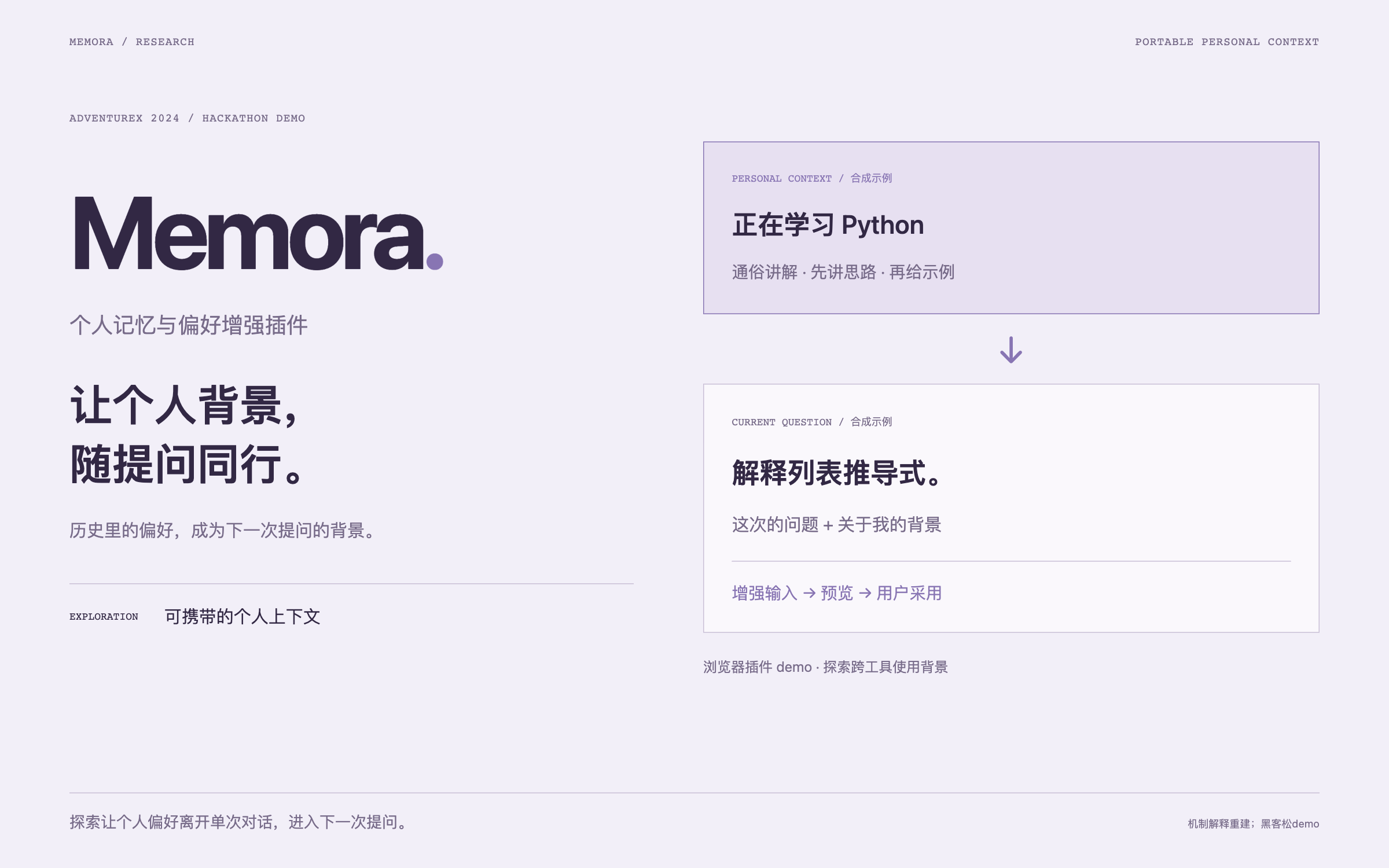
Personal context and preferences often stay inside individual conversations. At AdventureX 2024, I joined the team building Memora to explore carrying that context into the next question through a browser extension. This was a hackathon demo rather than a mature cross-platform service.
Personal background and the current question
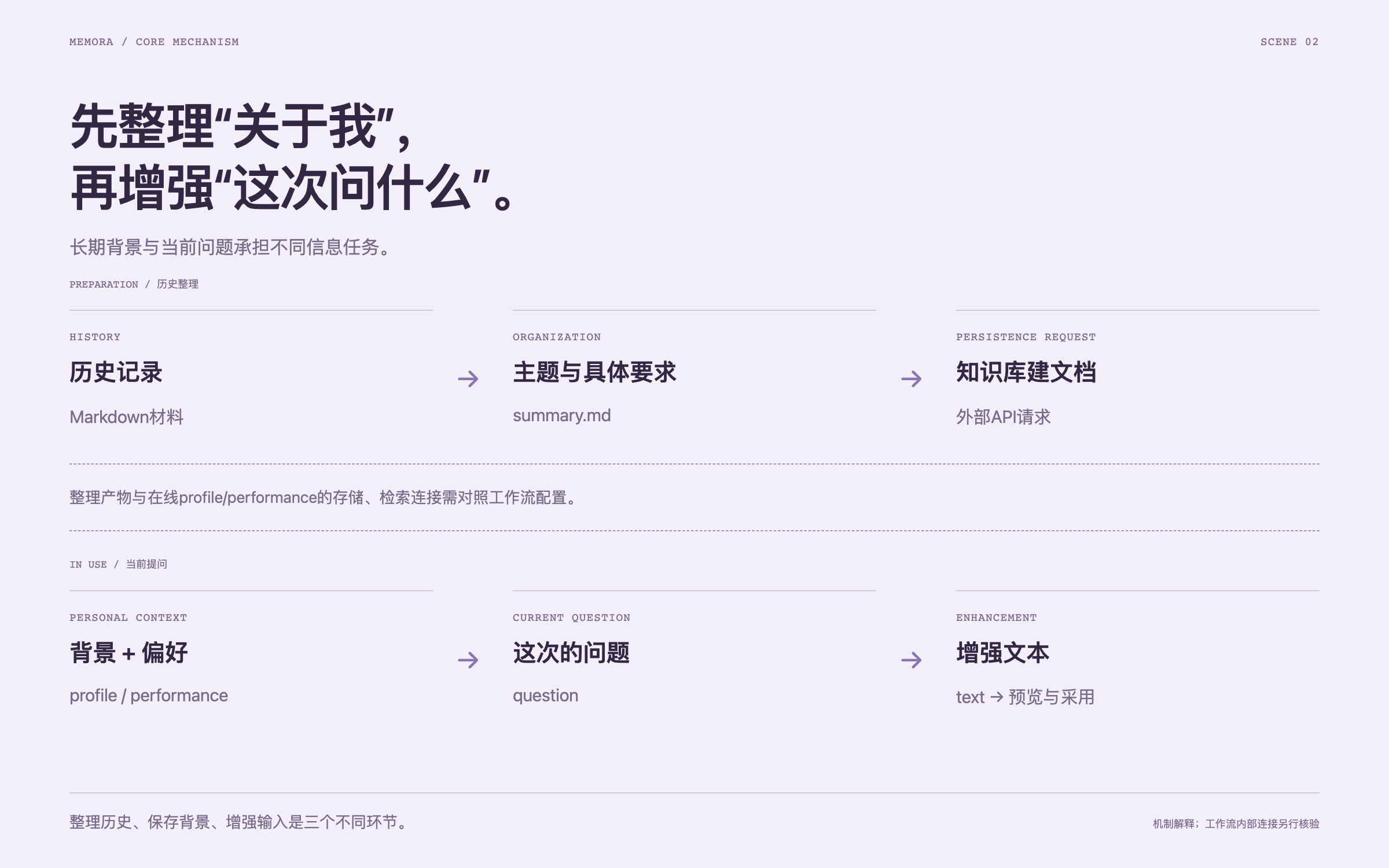
Historical Markdown records are processed through an external workflow into a topic-based summary. The online service supplies profile, performance, and the current question to an enhancement workflow. These paths illustrate context preparation and prompt enhancement, with continuous updating and retrieval still requiring a complete memory workflow.
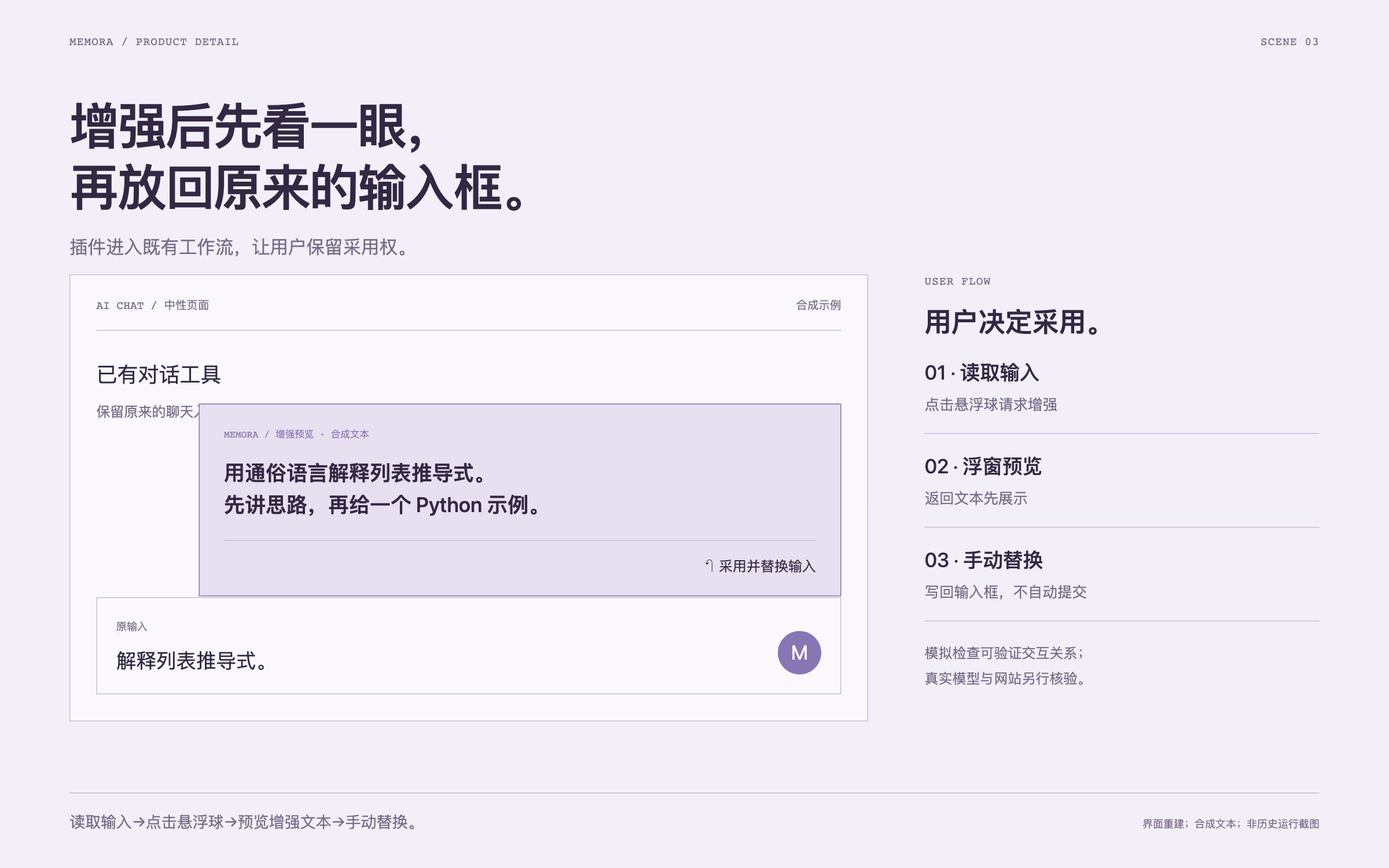
Previewing and adopting an enhanced prompt
The extension reads the current input, requests an enhancement, and presents the returned text in a floating preview. A replacement button writes it back to the original input. This keeps the decision with the user and fits the sequence of writing, checking, and choosing a prompt.
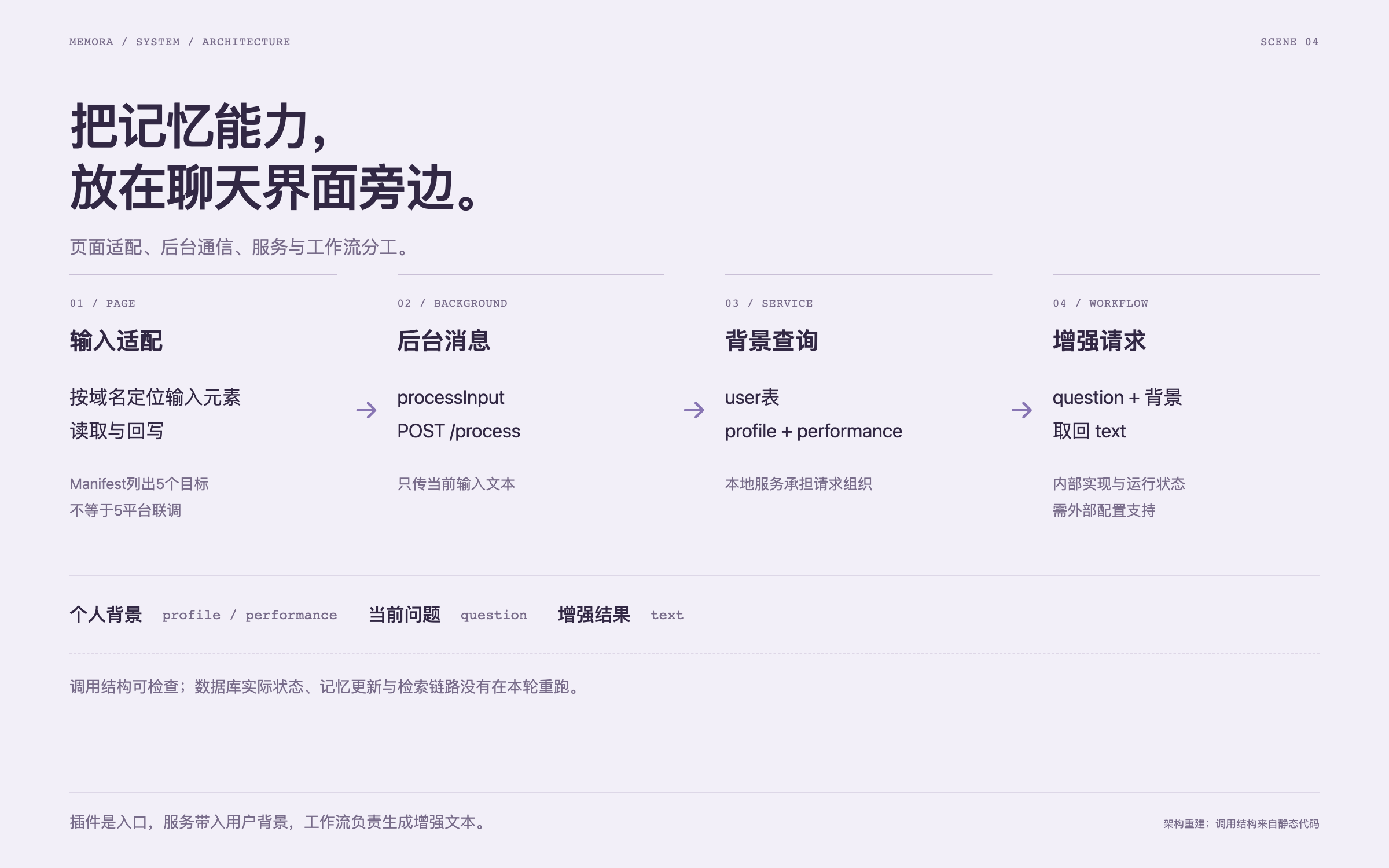
The browser plugin entry point
Page adapters identify input elements, the extension background handles messages, and a Flask service queries user context and calls the external workflow. Five configured website targets describe adaptation intent; they do not establish five successful live integrations. Reconstructed screens explain the demo architecture.
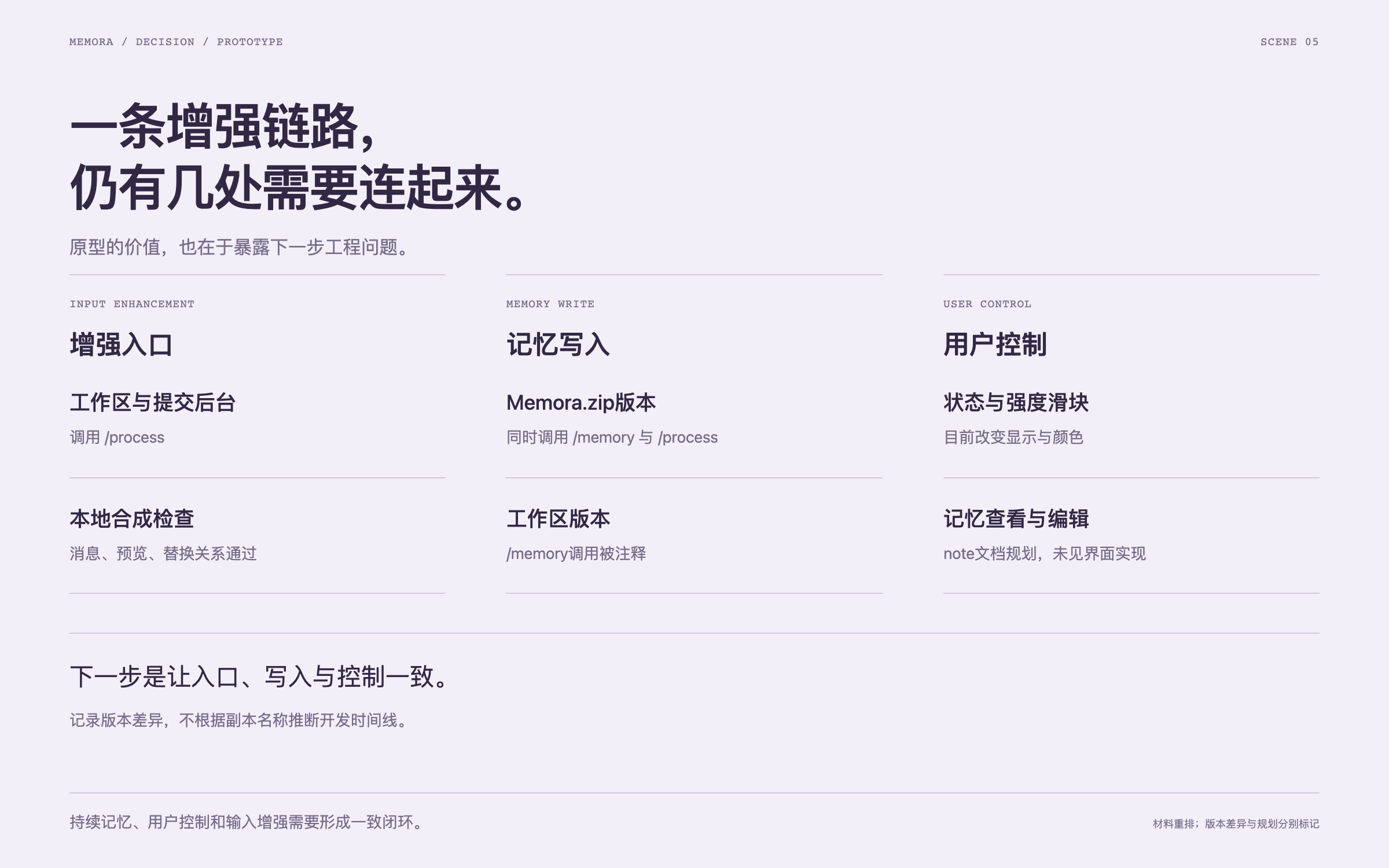
What the demo still leaves unconnected
Archived versions differ in their use of memory and process endpoints. Display controls are not fully connected to storage or backend control, while login and memory editing remain plans. The prototype makes the next engineering questions concrete: how context updates, how users control it, and how enhancement inputs can be inspected.
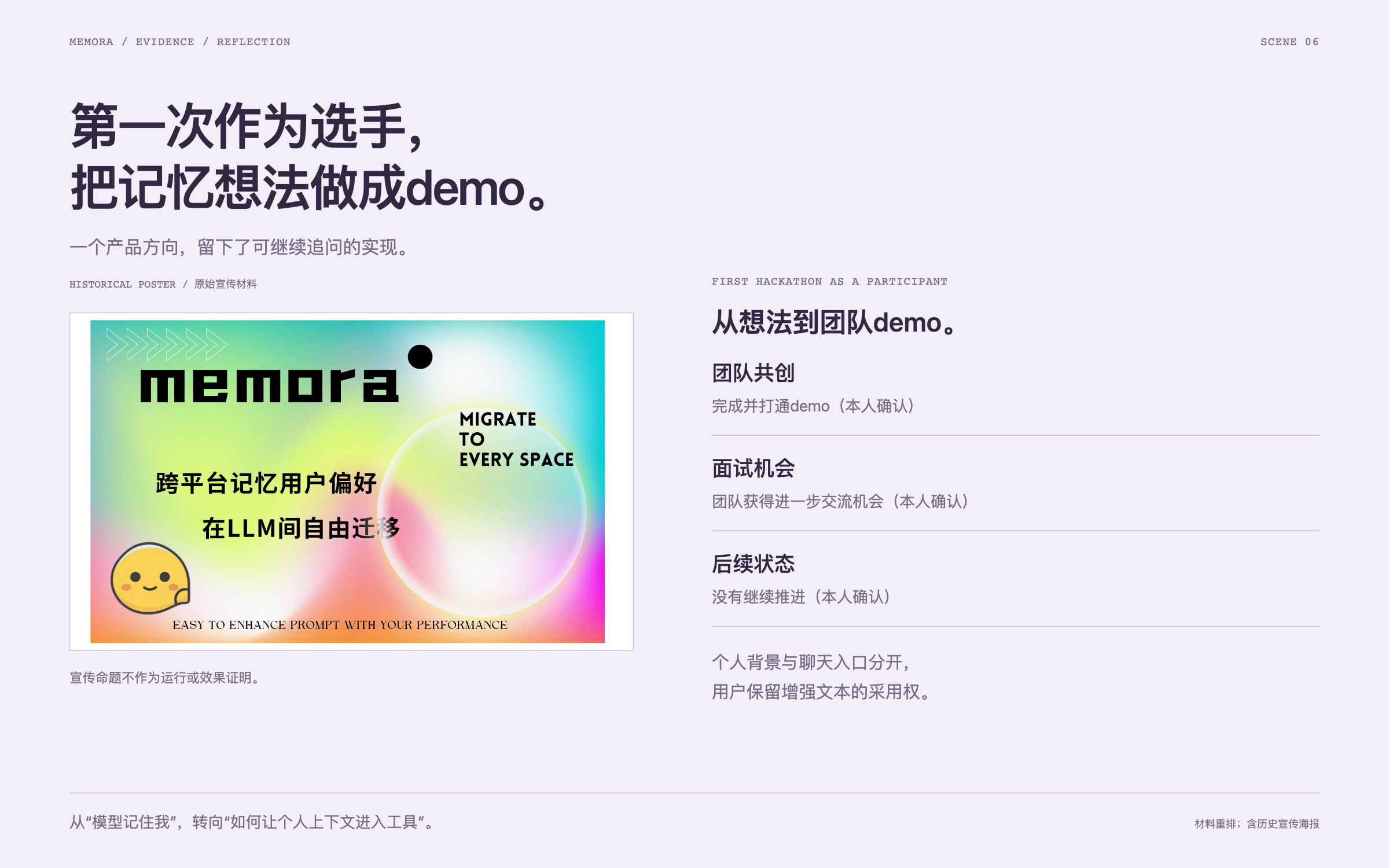
My first AdventureX as a participant
I co-created and helped develop the connected team demo, which led to an interview opportunity before the project stopped progressing. This 2024 participation is separate from the 2025 AdventureX event-platform work. Module ownership is not individually itemized; the lasting product decision was to separate personal context from the chat entry point and keep adoption under user control.