Nurses, doctors, patients, and the kitchen
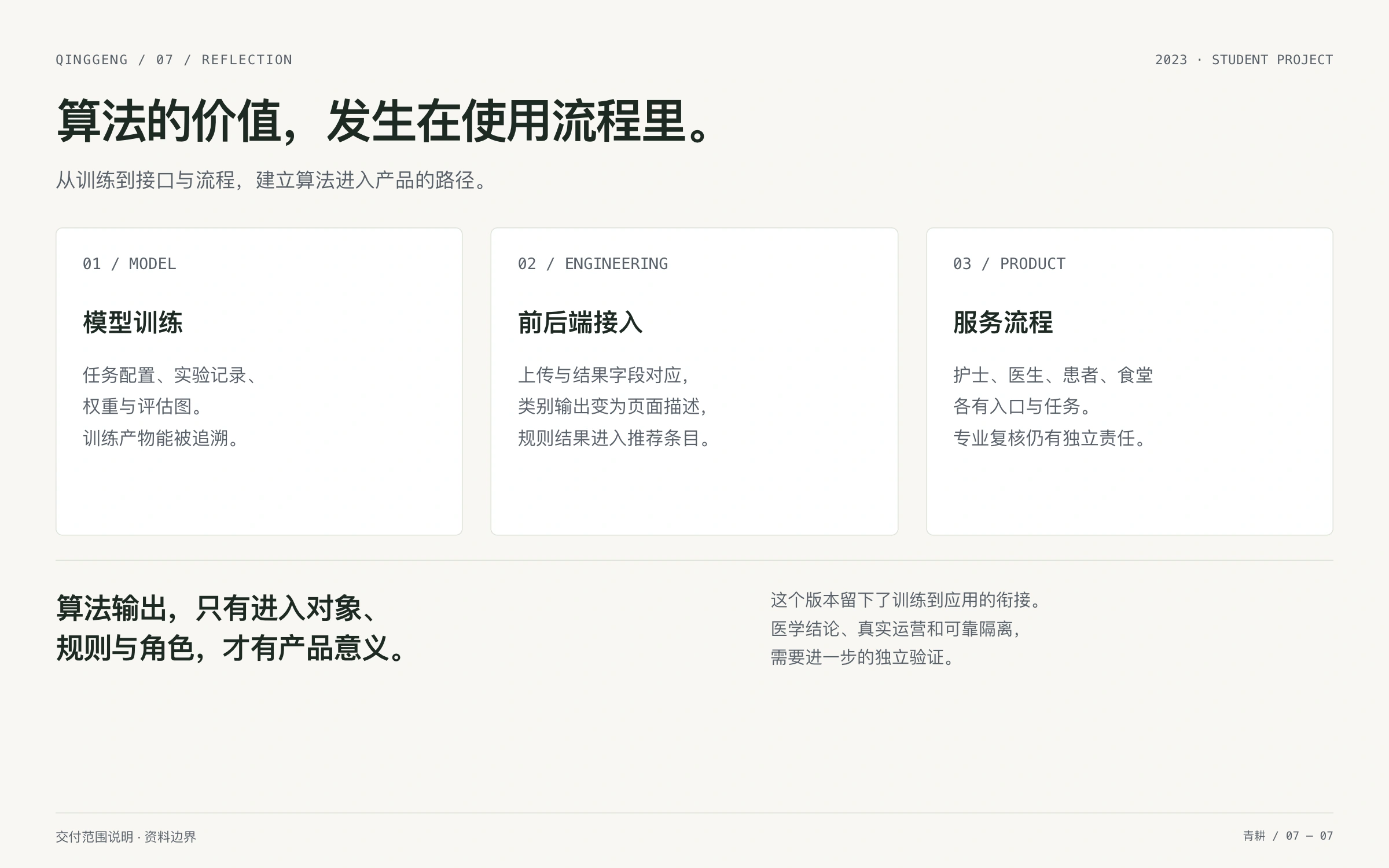
The university team prototype designed a postoperative dietary workflow spanning nurses, doctors, patients, and catering staff. Recognition output needed a place in image collection, review, recommendations, and ordering. I worked on model training, the recommendation mini program, and the interfaces that connected them.
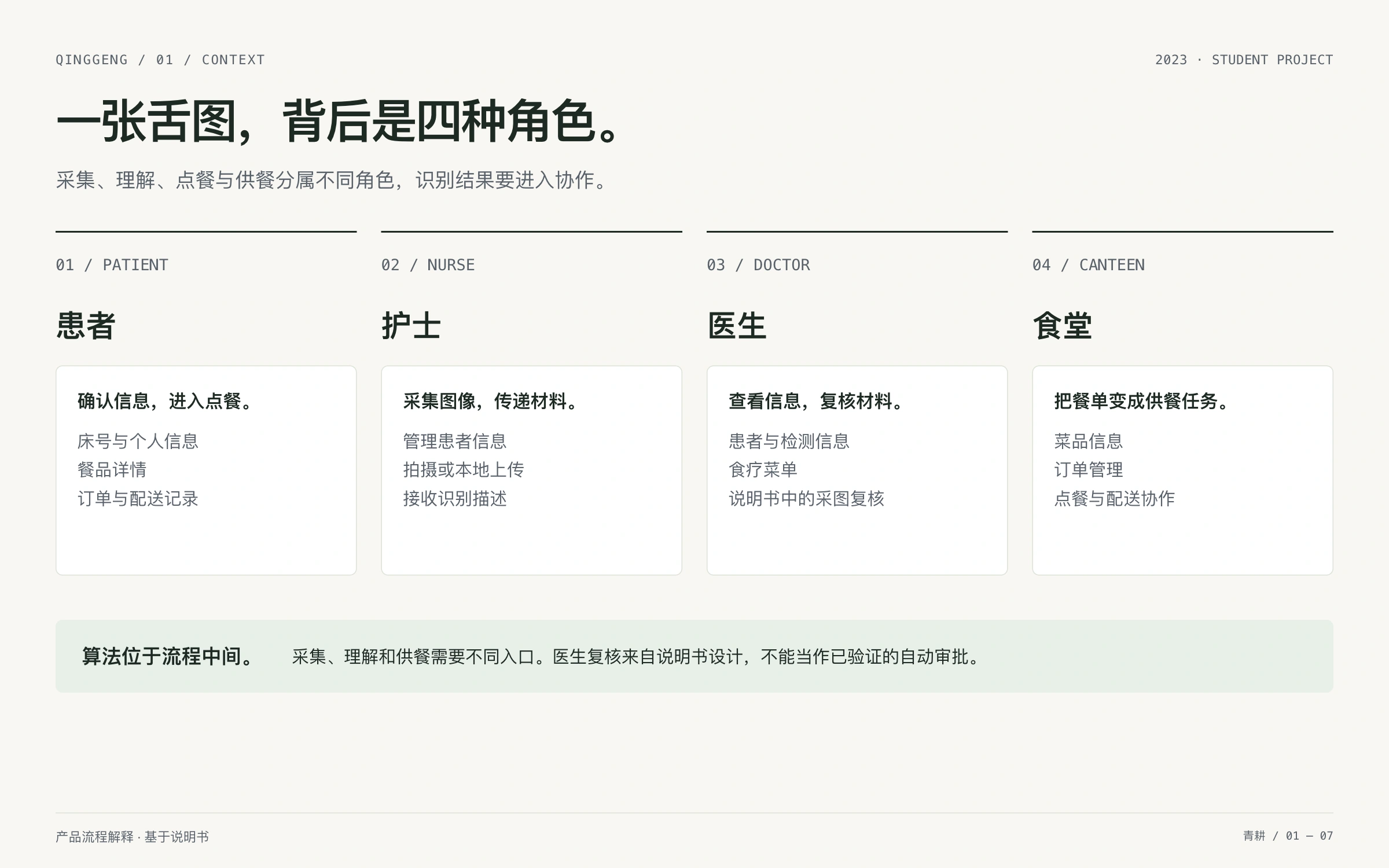
Image input and recognition output
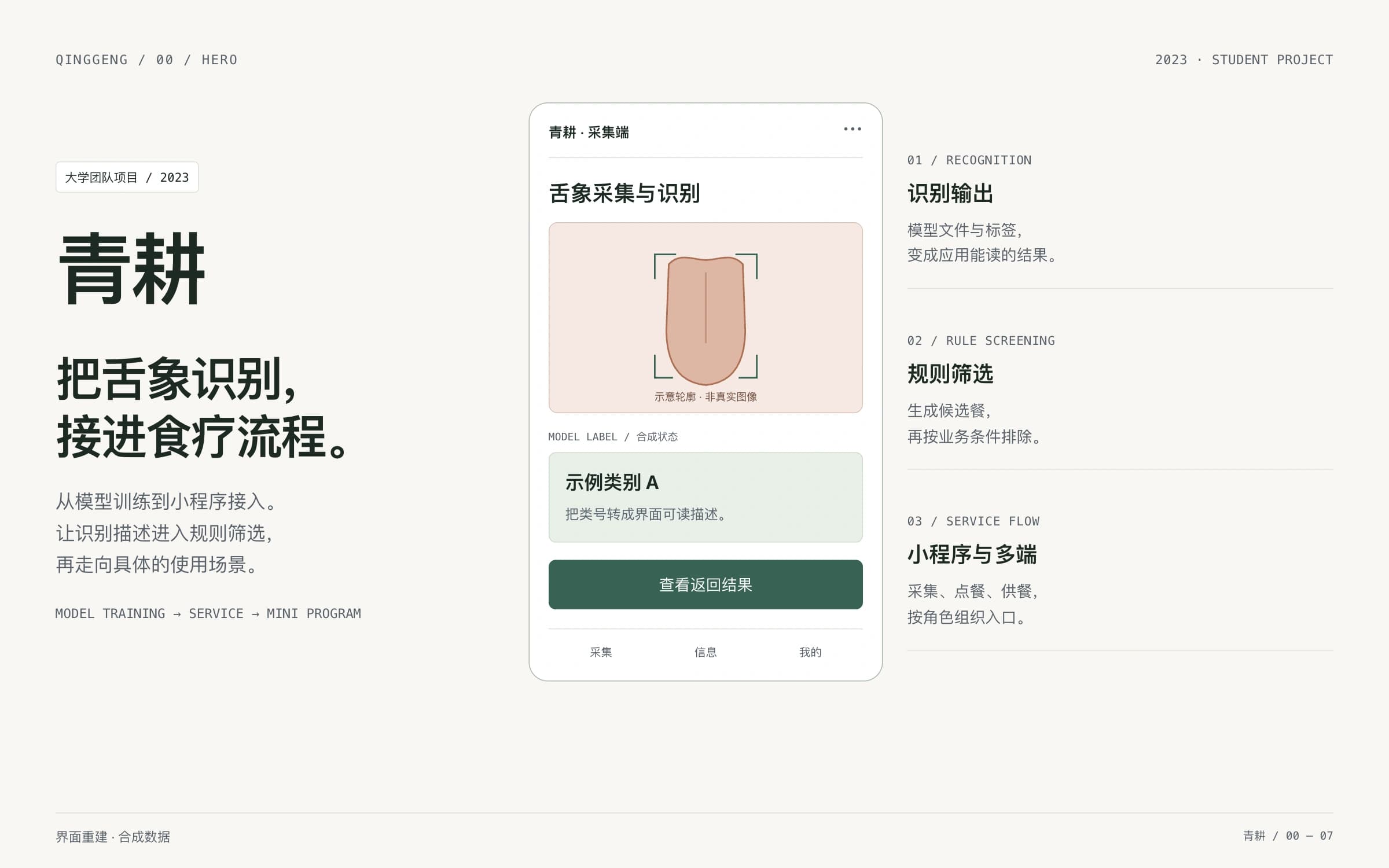
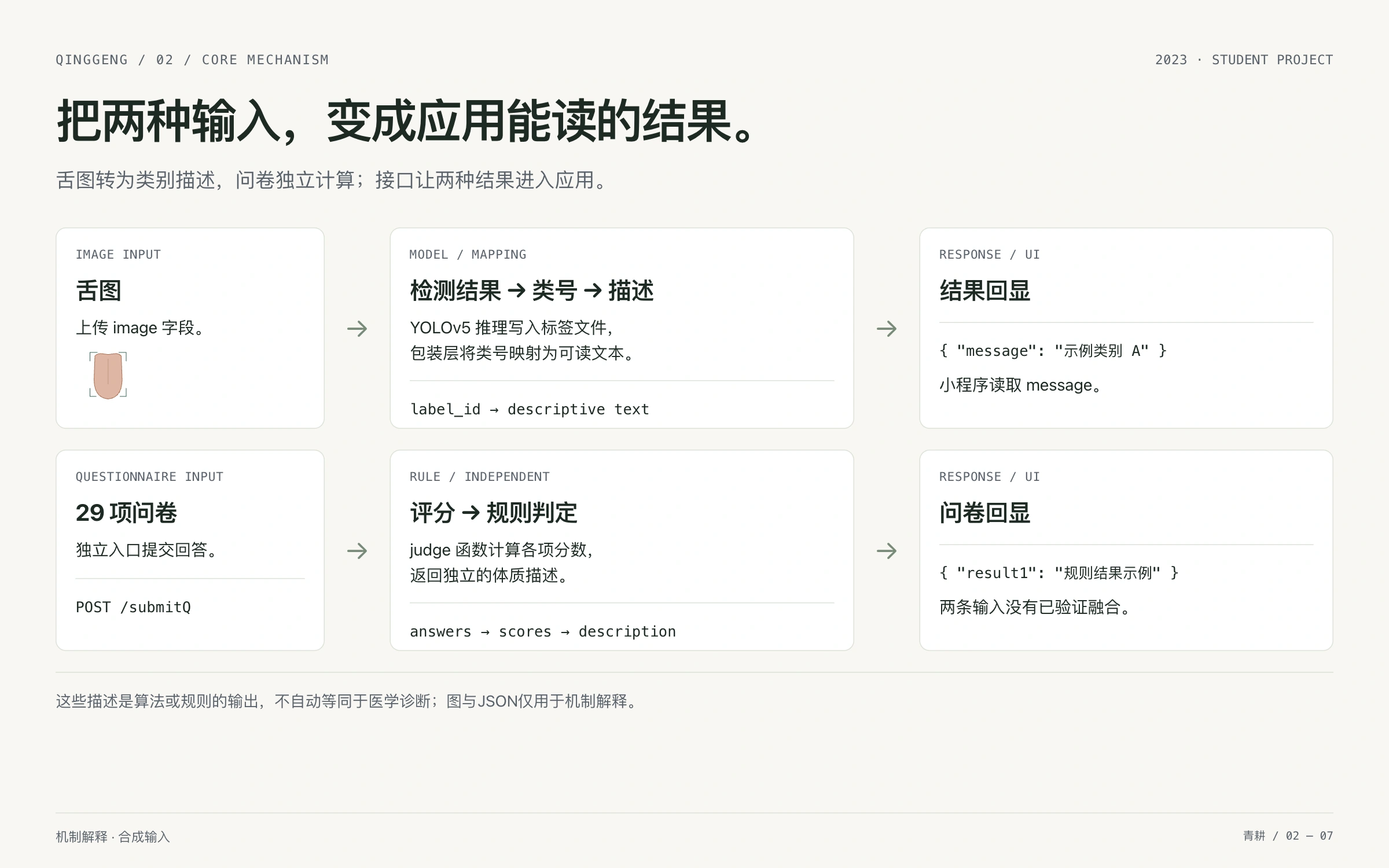
YOLOv5 class IDs map to descriptions returned through the image-upload service as message. A separate 29-item questionnaire uses rules and returns result1. These are distinct implementation paths; the case does not describe them as a clinically validated fused model.
Recommendation and exclusion rules
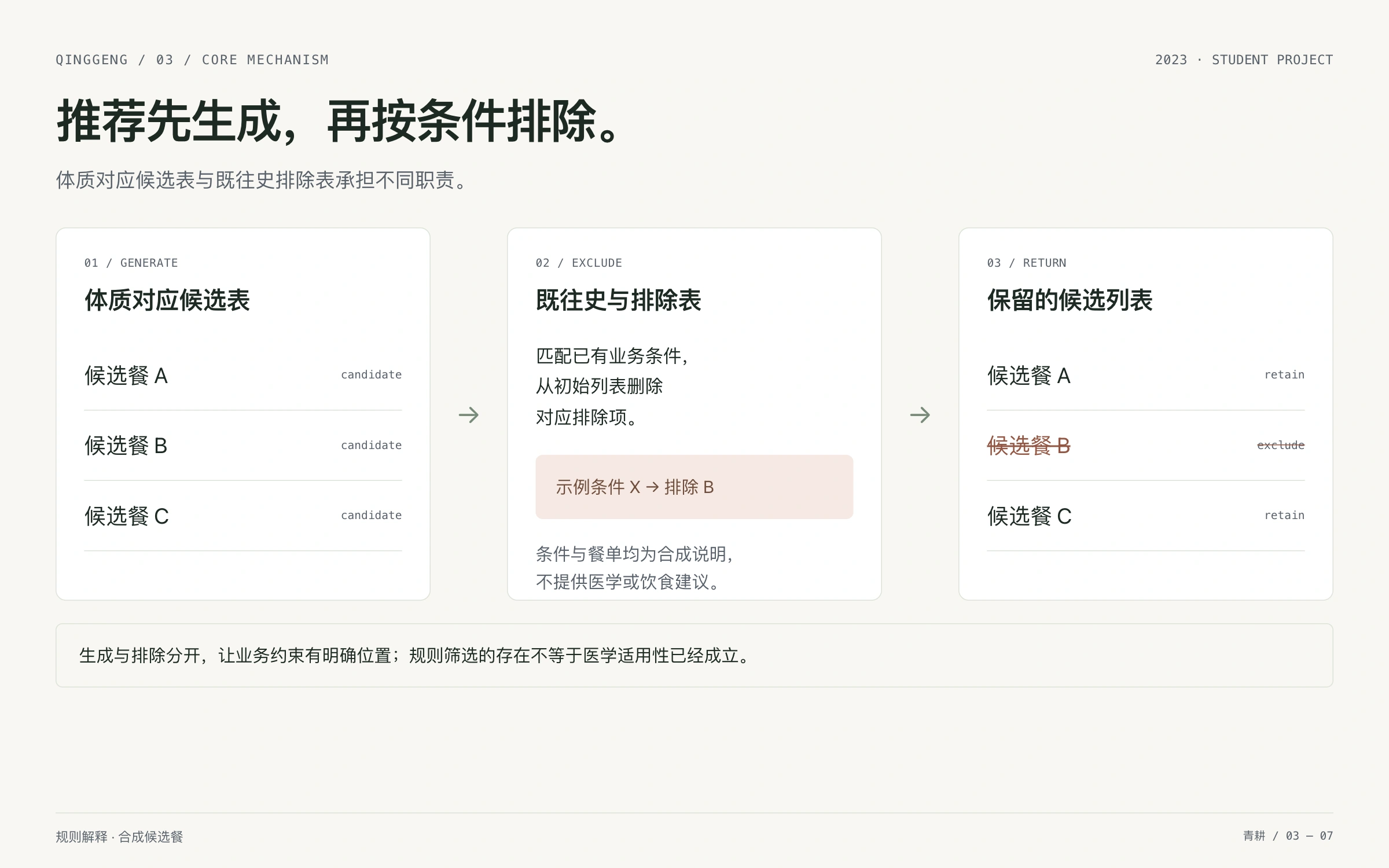
Recommendation code starts from a constitution-related lookup and removes candidates using history and exclusion tables. Separating generation from filtering gives business conditions an explicit place in the workflow. The prototype explains rule handling, with medical sources and effectiveness requiring professional verification.
The flow in the mini program
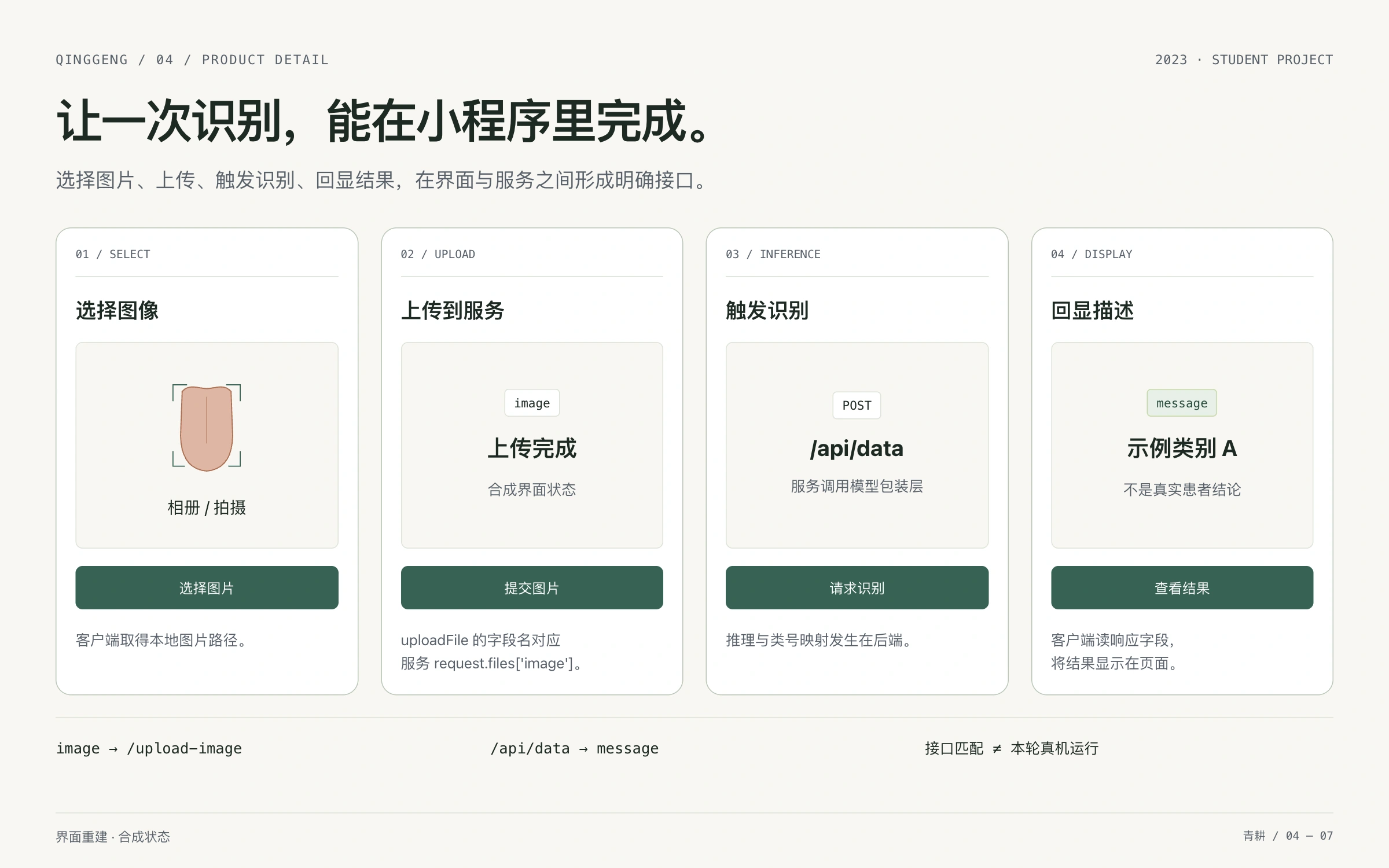
The collection interface uploads an image to Flask and displays the returned description. The recommendation interface requests entries by bed identifier and brings them into ordering. My work extended beyond training to matching service fields with application steps, using reconstructed screens to explain the prototype.
Algorithm services and rule interfaces
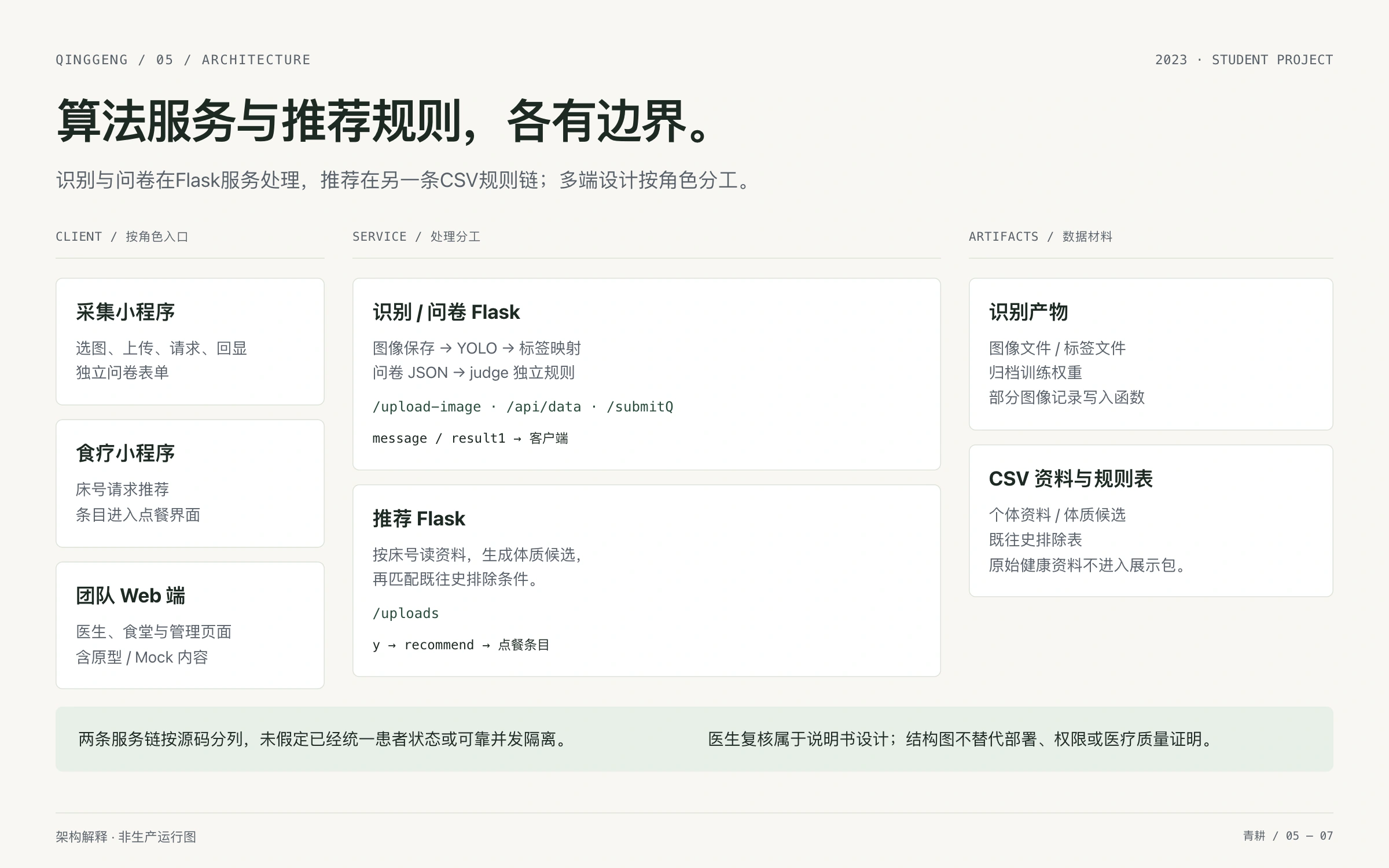
Recognition handles images and label mapping, the questionnaire has its own rules, and recommendation uses CSV material and exclusions. Team members built the separate role interfaces. This describes the archived architecture; reliable patient isolation, a complete approval process, and production operation are separate questions.
Training records and metrics
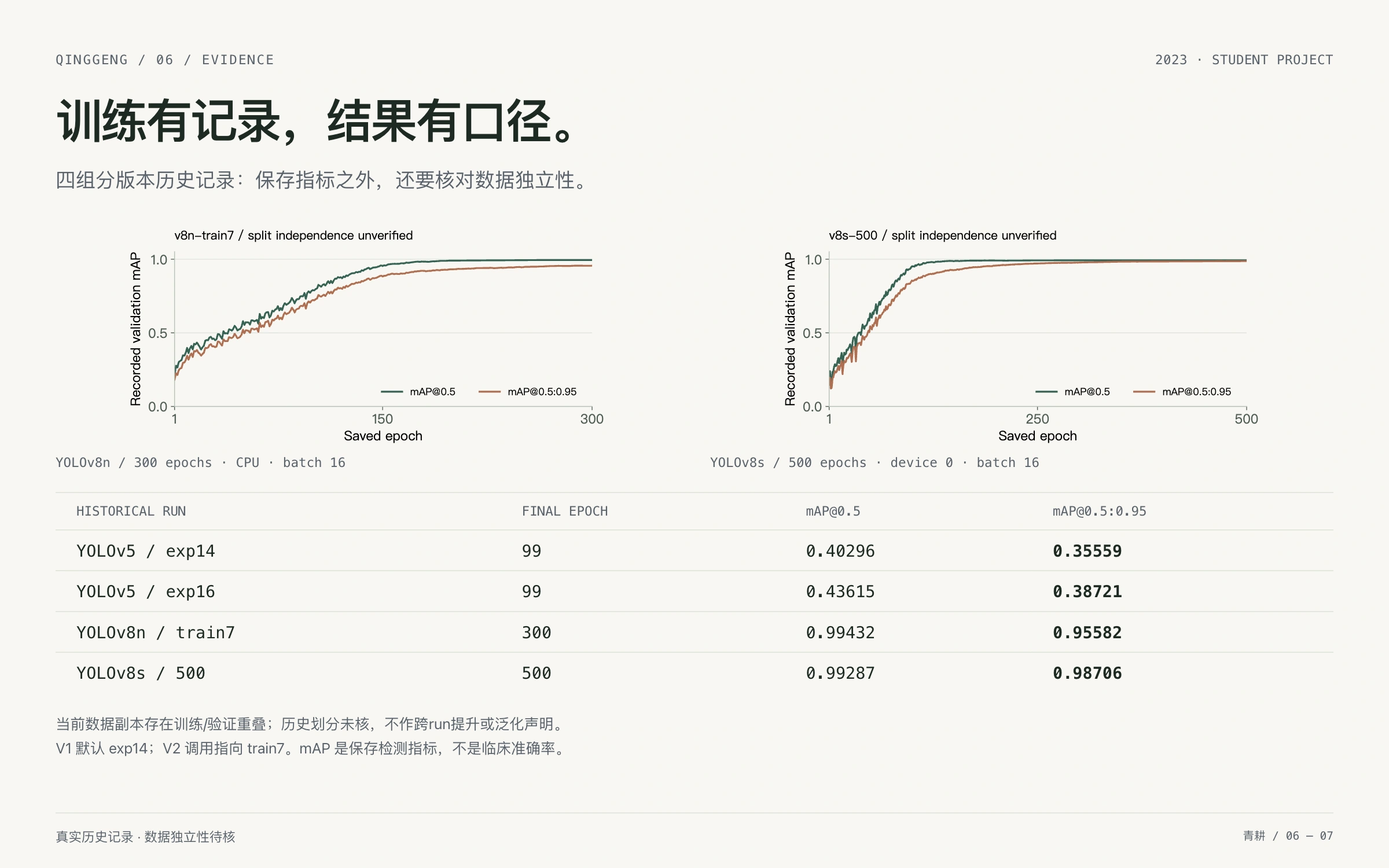
Two archived runs each contain 100 epochs, configurations, weights, and plots, with final mAP@0.5 values of 0.40296 and 0.43615. These are detection metrics, not clinical accuracy. The current data copy overlaps training and validation, with historical splitting unconfirmed, so the case makes no generalization or improvement claim.
My work on the model and mini program
I trained the tongue-image model, implemented the recommendation mini program, and connected frontend and backend behavior within the team prototype. The central lesson concerns who reads an output and what happens next. Professional review, independent evaluation, and complete runtime verification remain necessary before stronger medical use.