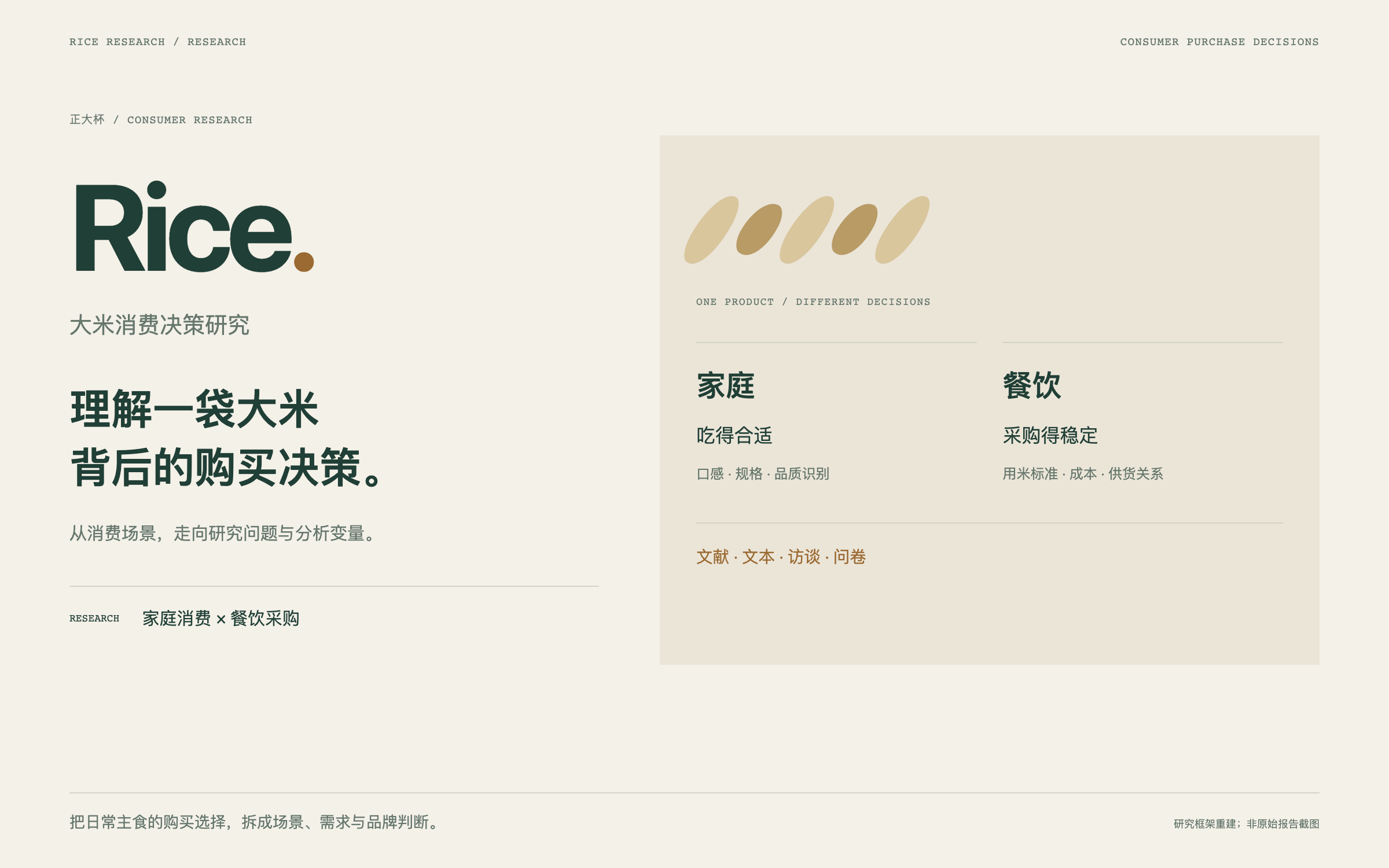
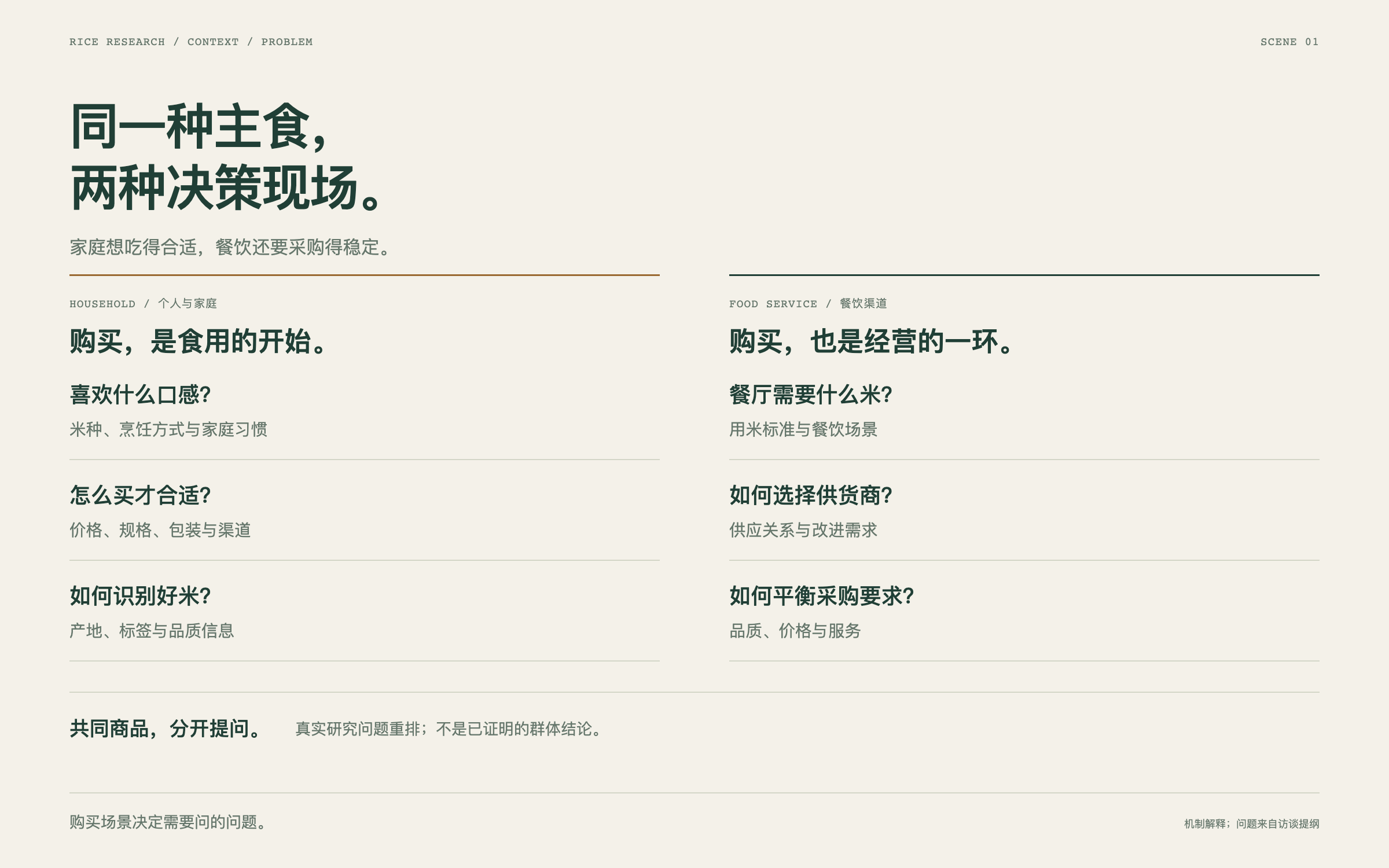
Household purchases and restaurant procurement
Households consider taste, size, packaging, and meals; catering buyers also need standards, cost control, and reliable supply. I separated these interview groups so research questions could reflect distinct purchasing situations and support recommendations relevant to each.
Literature, consumer text, interviews, and questionnaires
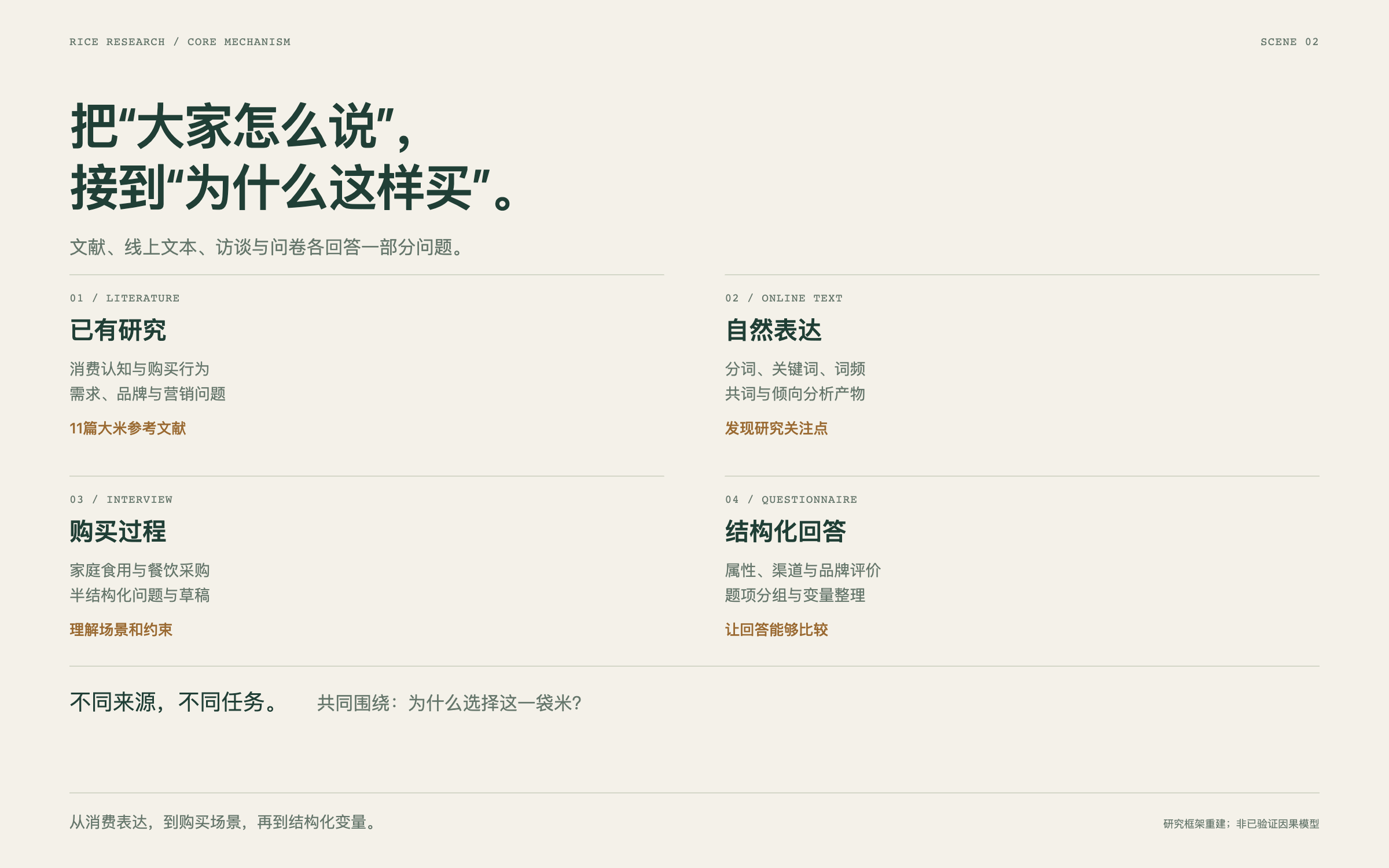
The research combines 11 references, online consumer text, semi-structured interviews, and questionnaires. Each contributes a different view: variable ideas, natural expression, purchasing context, and comparable items. Together they organize the inquiry without independently establishing causal relationships.
Segmentation, co-occurrence, and sentiment
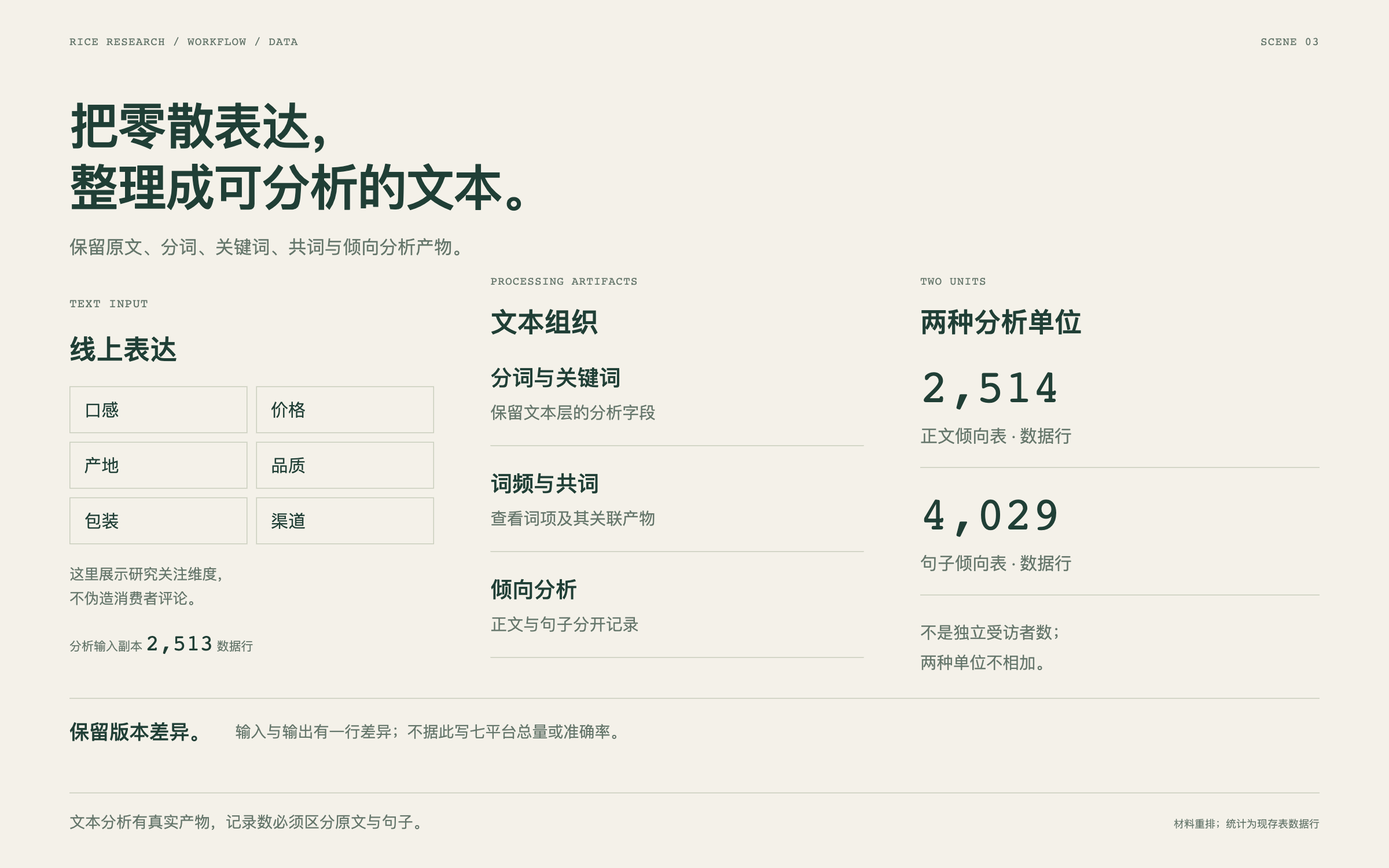
Retained outputs include segmentation, keywords, frequencies, co-occurrence matrices, and sentiment-related tables. The full-text table has 2514 rows and the sentence table 4029. These are different analytical units and cannot be added as independent respondents; preserving the unit gives scale a clear meaning.
667 questionnaire records
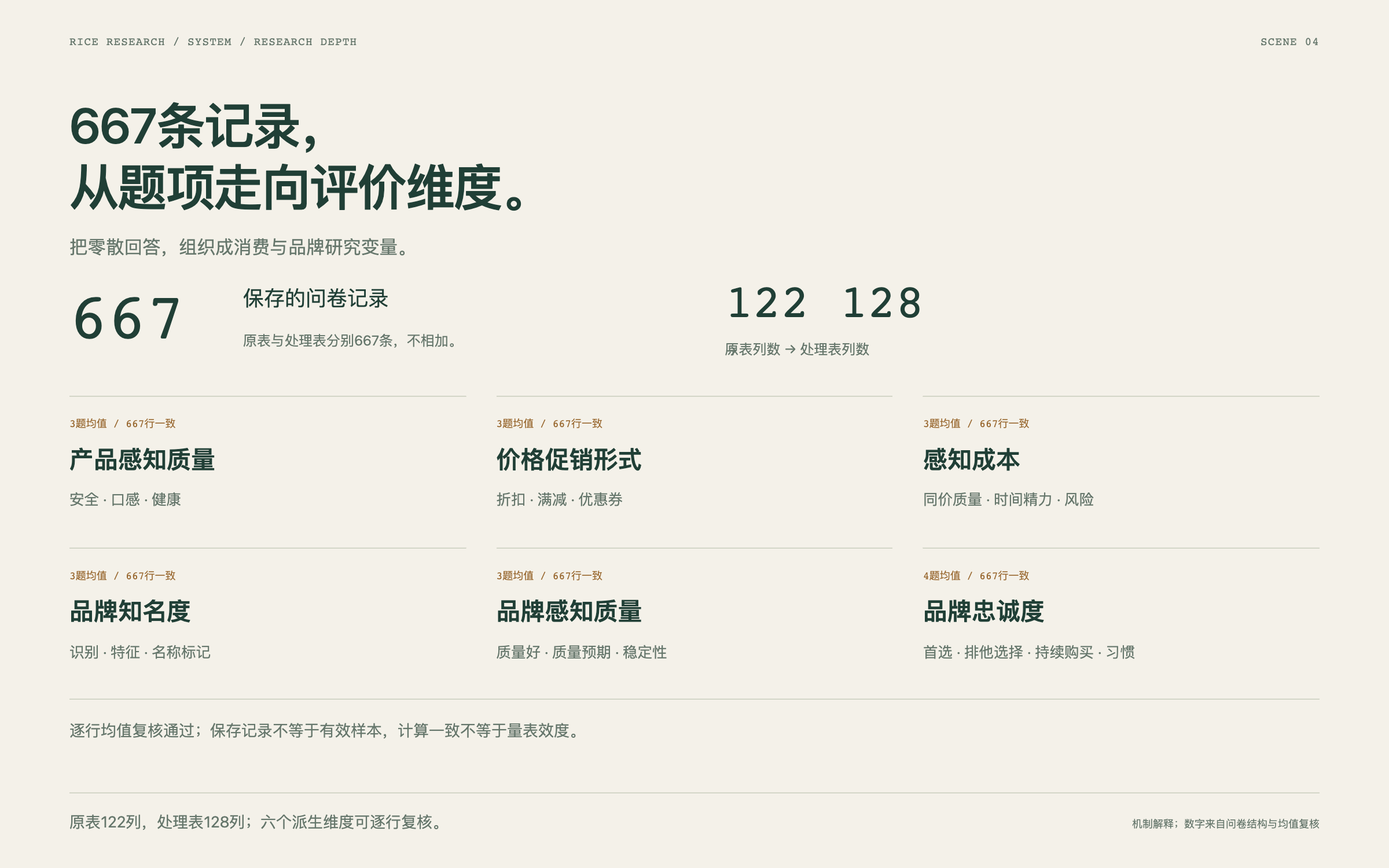
Raw and processed questionnaires each retain 667 records. The processed table adds six dimensions covering product quality, price promotions, perceived cost, brand awareness, brand quality, and loyalty, calculated from associated item means. Row-level checks support this transformation; retained records do not equal valid samples or establish scale validity.
Recommendations for different buying situations
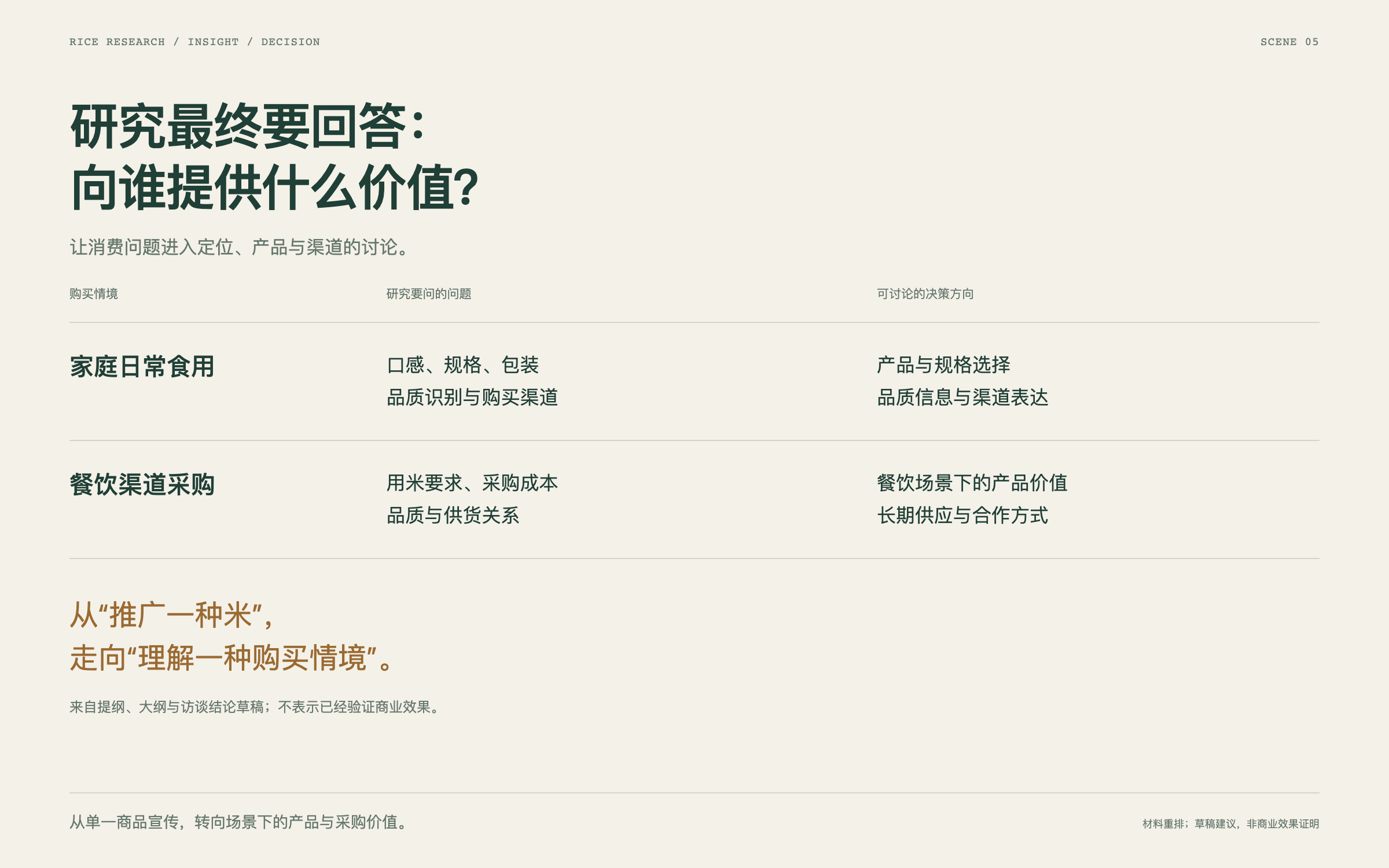
The research organizes discussions around positioning, pricing, product improvement, and channels. Household questions concern taste and quality recognition; catering questions concern cost, requirements, and supply relationships. Interview and chapter materials support these directions, while full quantitative conclusions require correspondence with the final report.
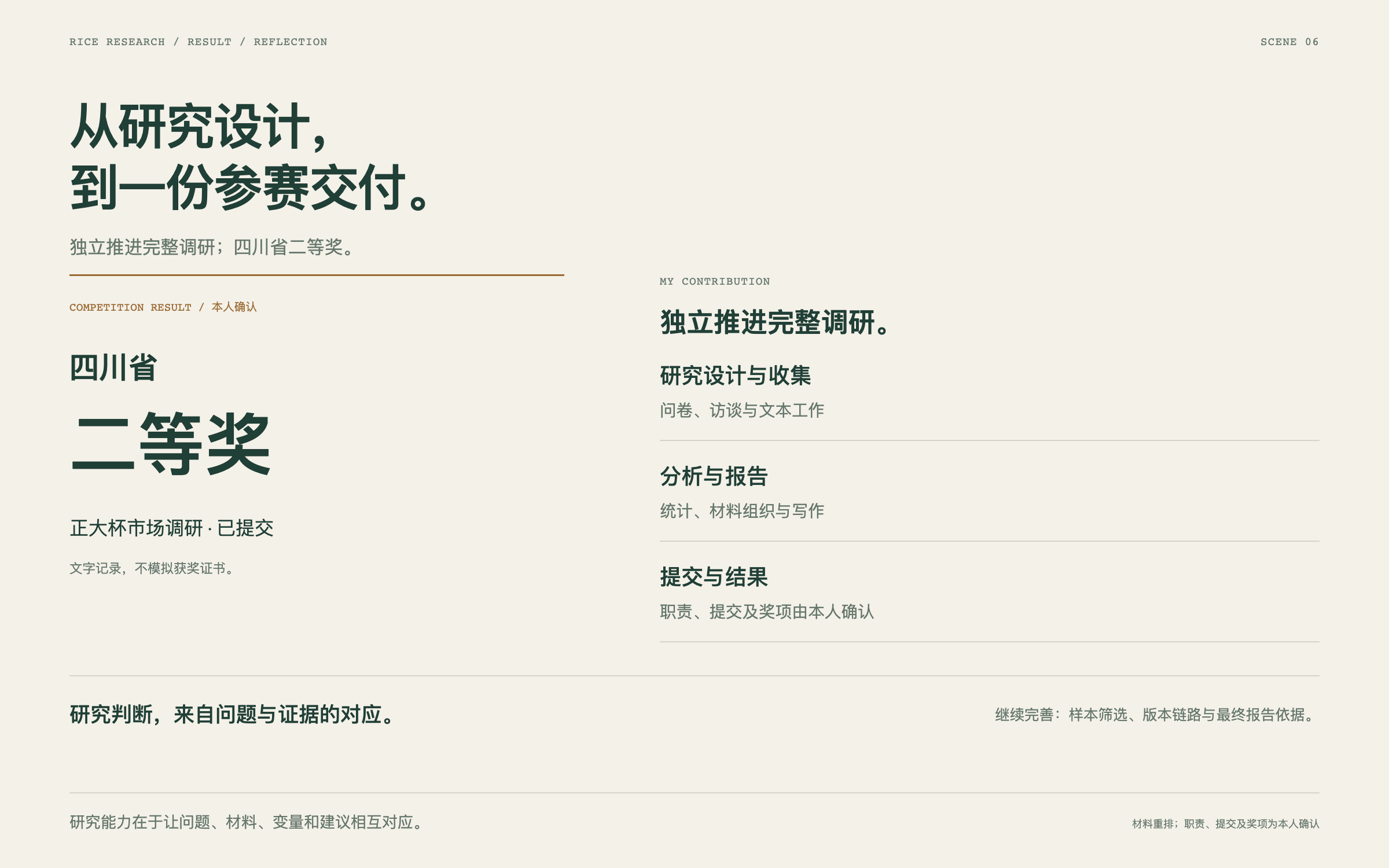
My independent work
I independently completed questionnaires, interviews, text and statistical analysis, and report writing, submitted the Zhengda Cup project, and received a Sichuan provincial second prize. The work turned everyday preferences into specific questions supported by different materials. Responsibilities and the prize are author-confirmed; the reconstructed framework explains methods without implying causal or commercial impact.