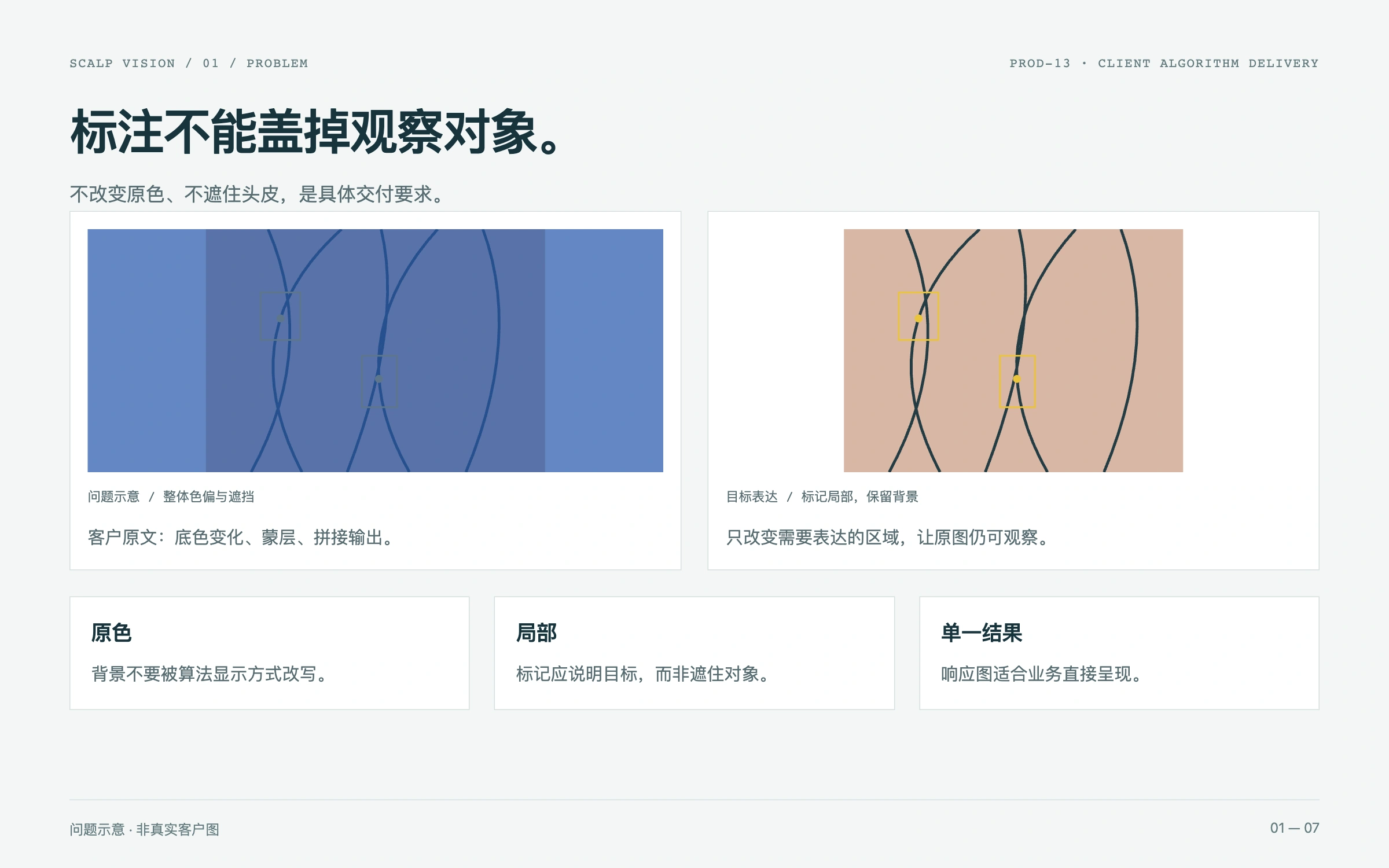
Client feedback on annotations
The client already had a scalp imaging system. Its requested changes concerned obscuring overlays, altered background colors, and stitched output. I focused the algorithm-layer work on making the target region visible while preserving the original image context.
Local annotations and background preservation
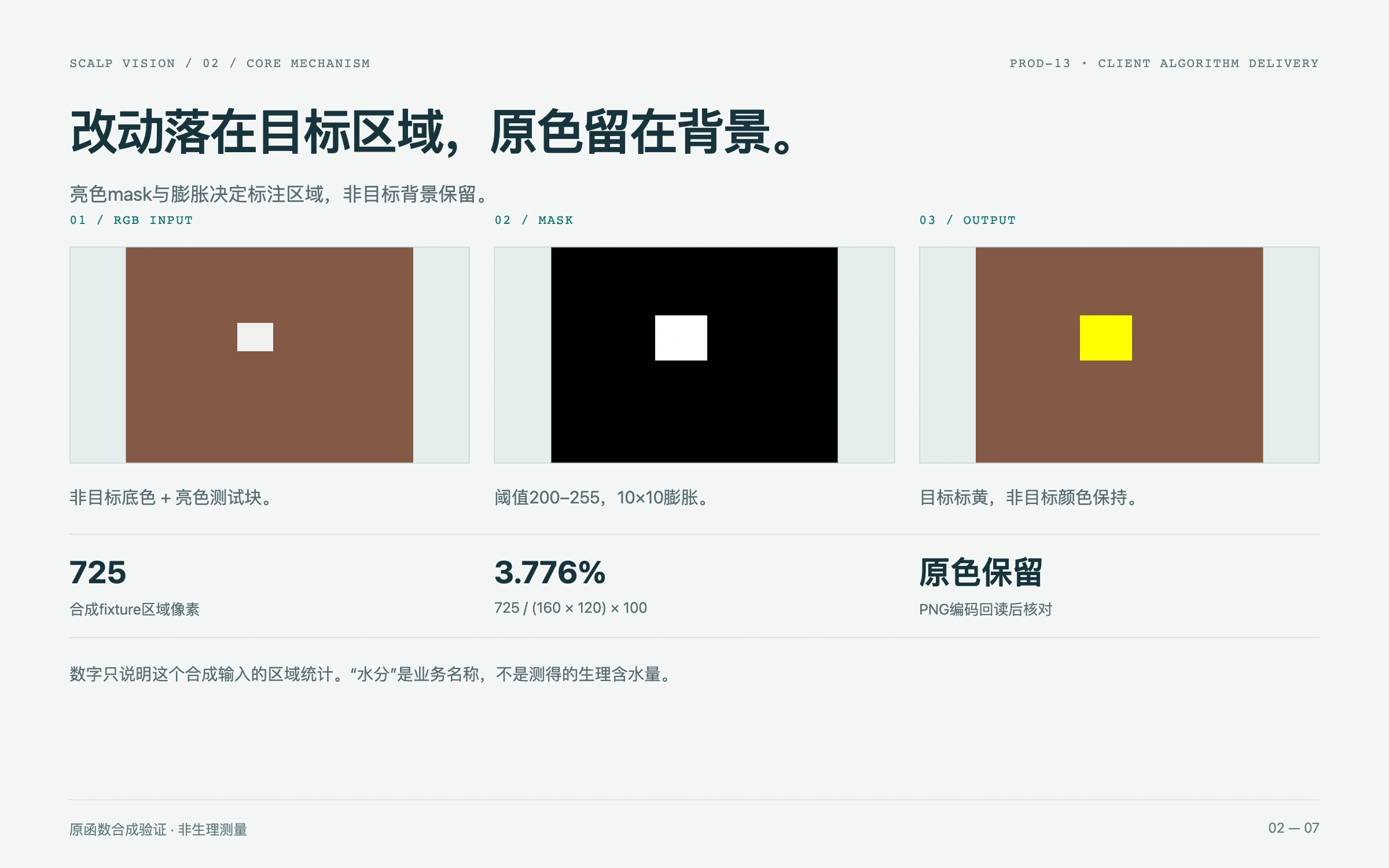
A bright-region mask and dilation define where annotation is applied. Synthetic-image checks inspect background preservation, visible color, encoding, and region counts. These pixel statistics describe the image-processing output; they do not measure physiological moisture or establish clinical validity.
RGB and BGR conversion
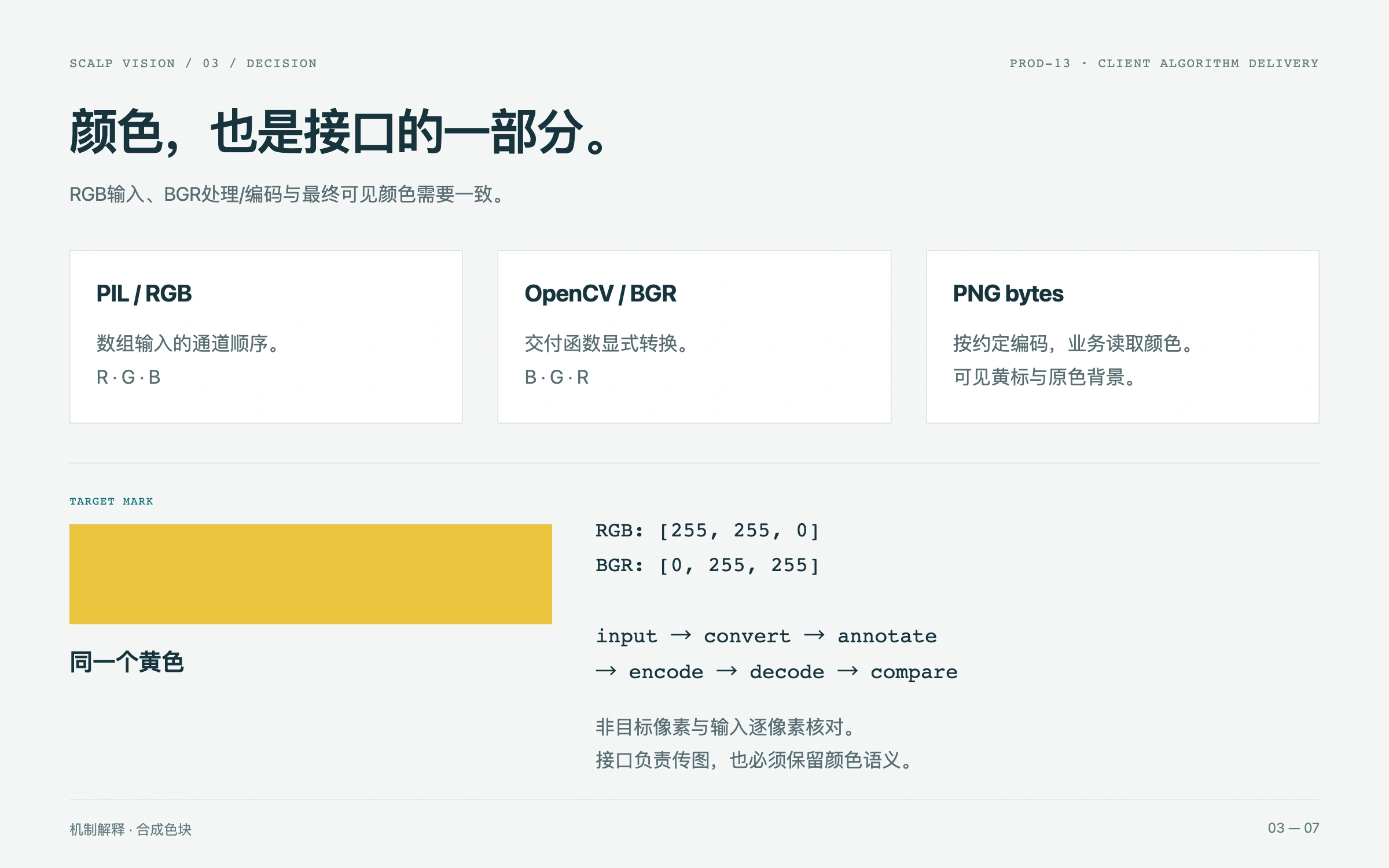
Images pass between PIL arrays, OpenCV processing, and encoded files. Consistent RGB and BGR handling keeps a correct internal result from becoming the wrong visible color. Explicit color conventions belong alongside field definitions in the delivery contract.
Classification, counts, and output fields
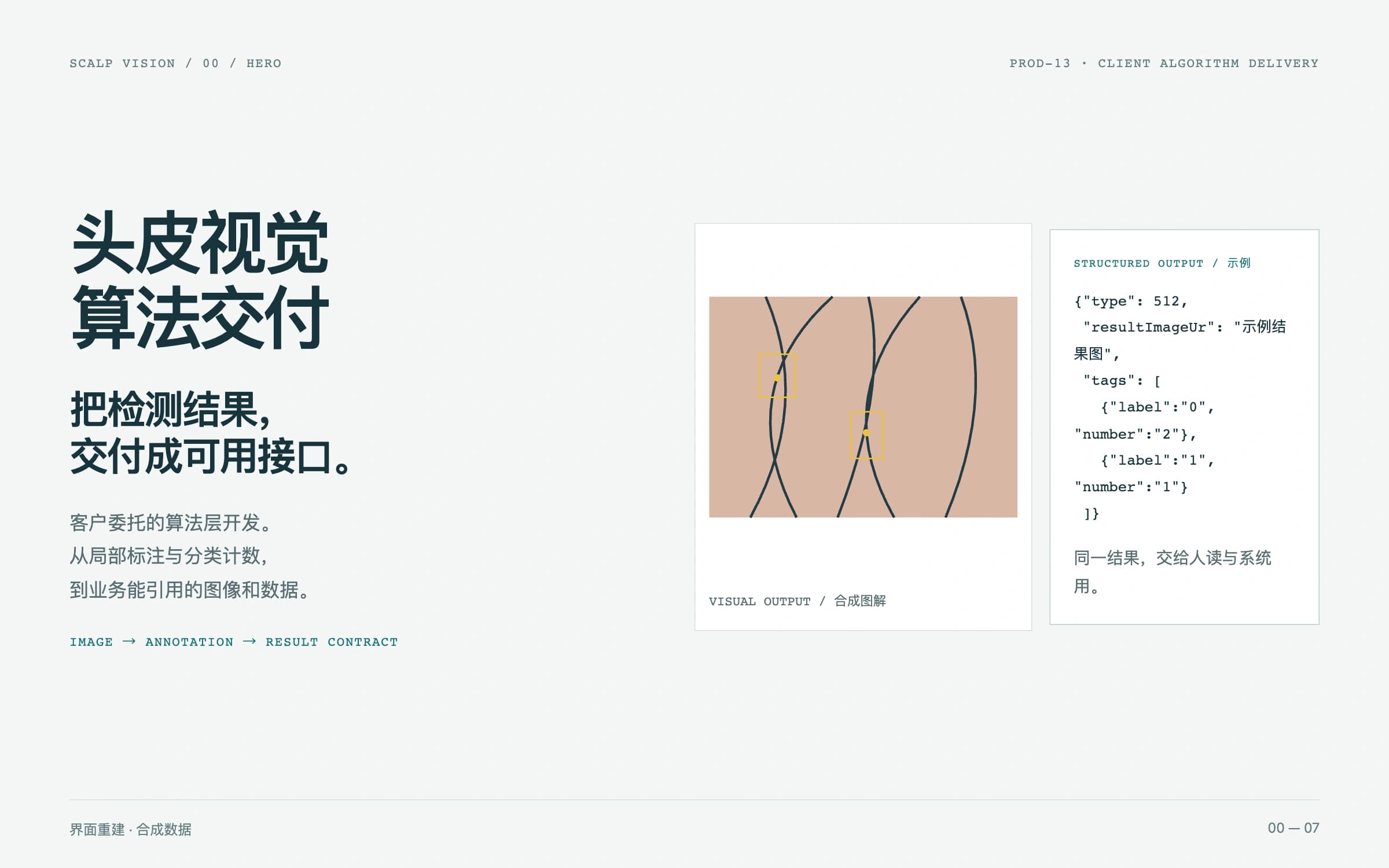
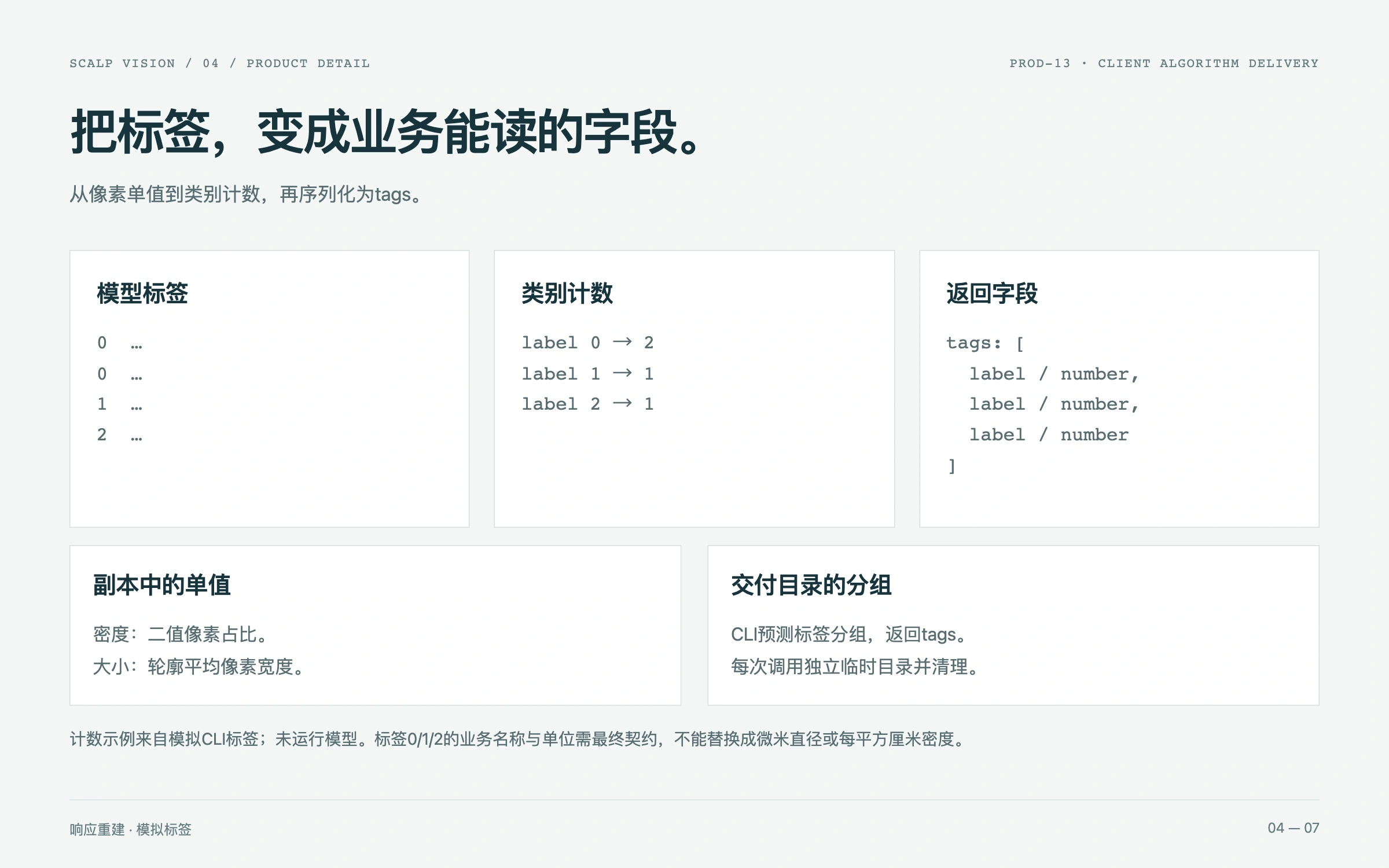
I packaged detection labels into hair-size and density class counts, serialized as tags. A result image supports human inspection while structured fields support the client application. The counts represent classification outputs, with physical diameter or area-density measurement requiring separate calibration.
HTTP and OSS integration
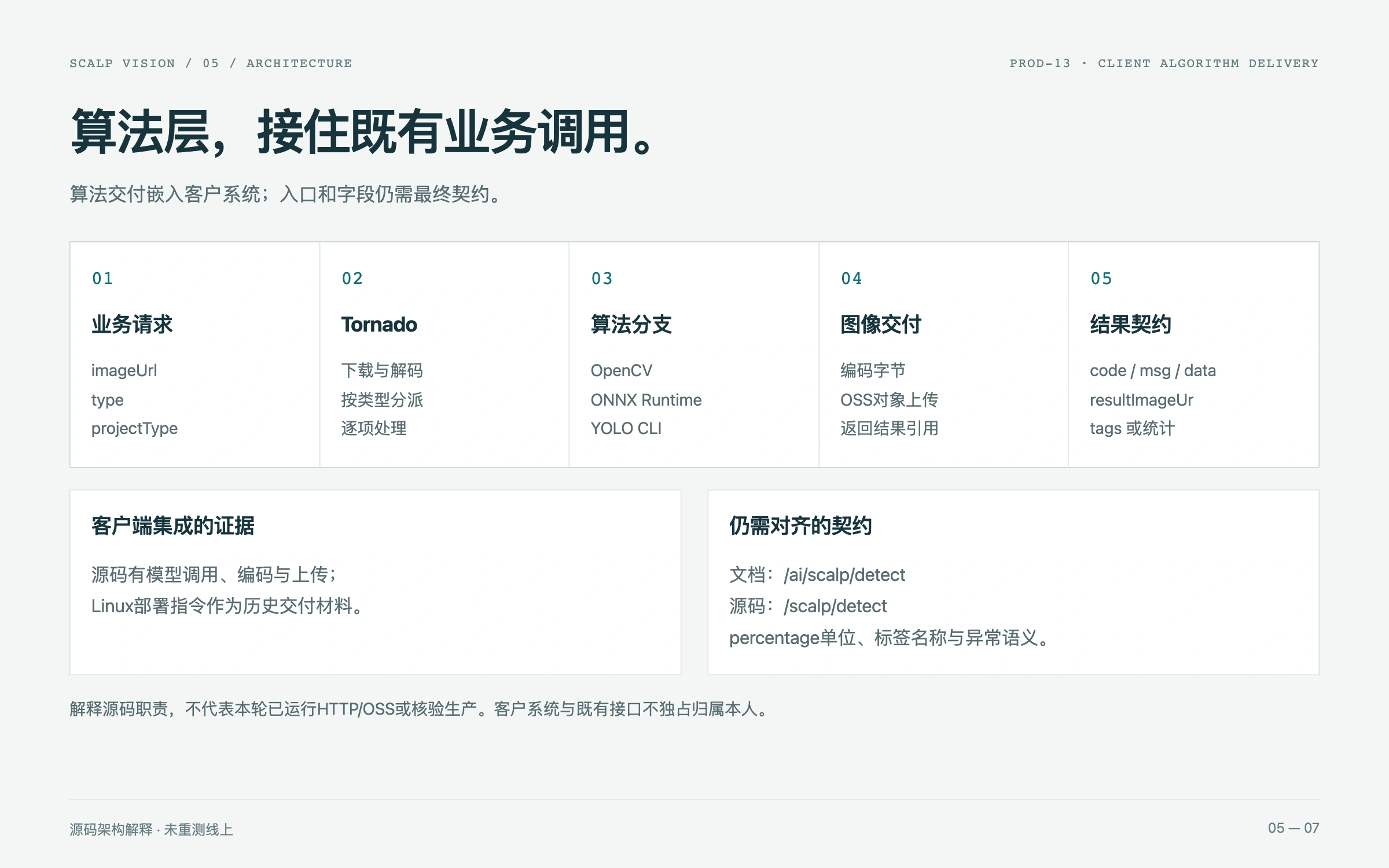
The service downloads request images, dispatches processing by type, encodes and uploads results to OSS, and returns image references with statistics. My scope covers algorithm-layer optimization and delivery within that existing system; the client platform and original models retain their respective ownership.
Evaluation conditions and historical records
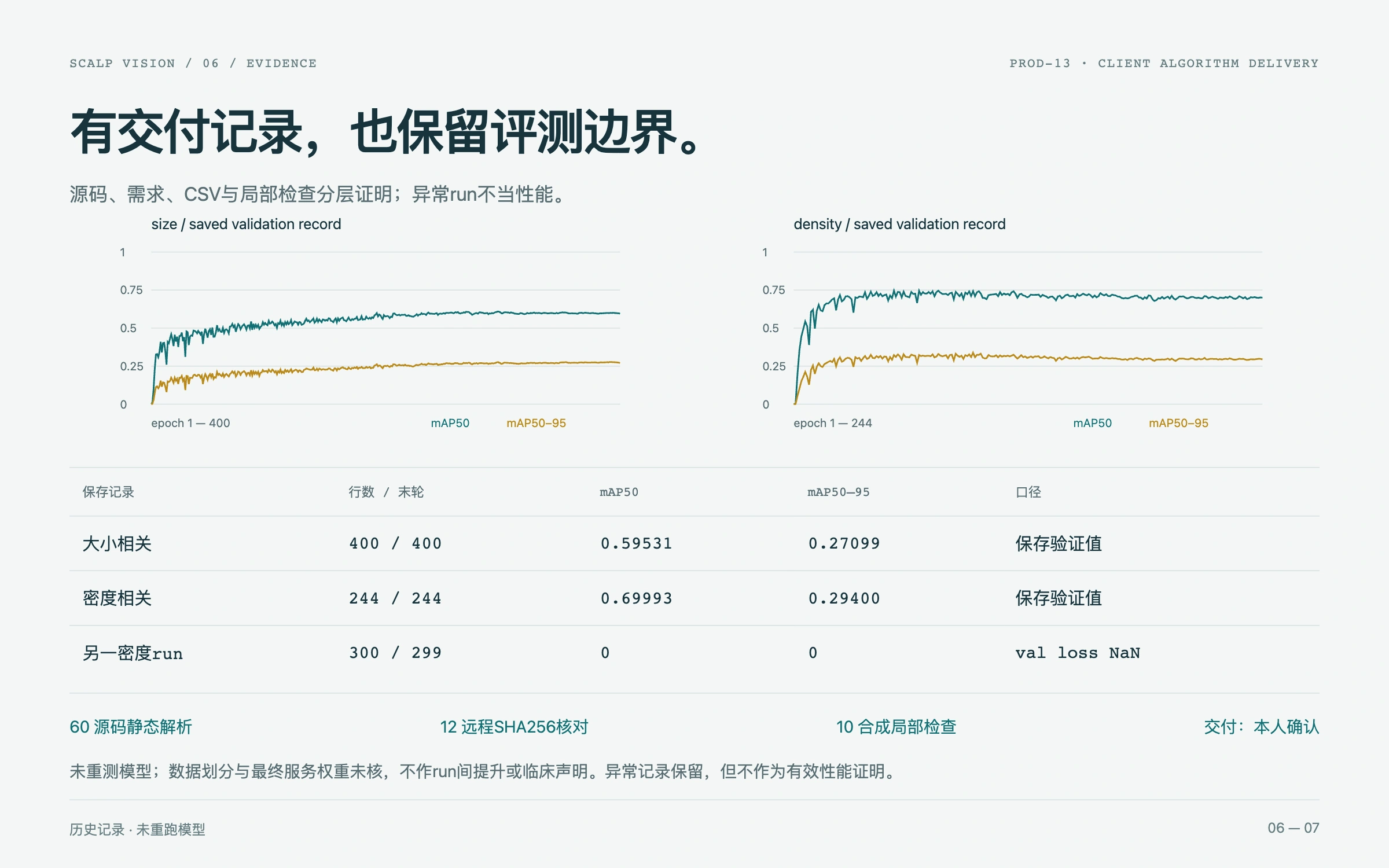
The commission was delivered, retaining requirements, implementation, interface documentation, and historical training records. One run contains zero mAP and abnormal loss and cannot support a performance claim. Local synthetic checks explain output behavior; production outcomes and medical validity require separate evidence.
My work and delivery scope
I improved visualization on existing code, extended hair-size and density count packaging, and completed algorithm-layer delivery. The work expanded my attention from inference to color conventions, field semantics, result references, and failure handling. The client is anonymous and the case uses synthetic contexts; it presents an engineering delivery without claiming clinical validation.