The next step after Lava
Lava → Vulcan · One side-project research path.
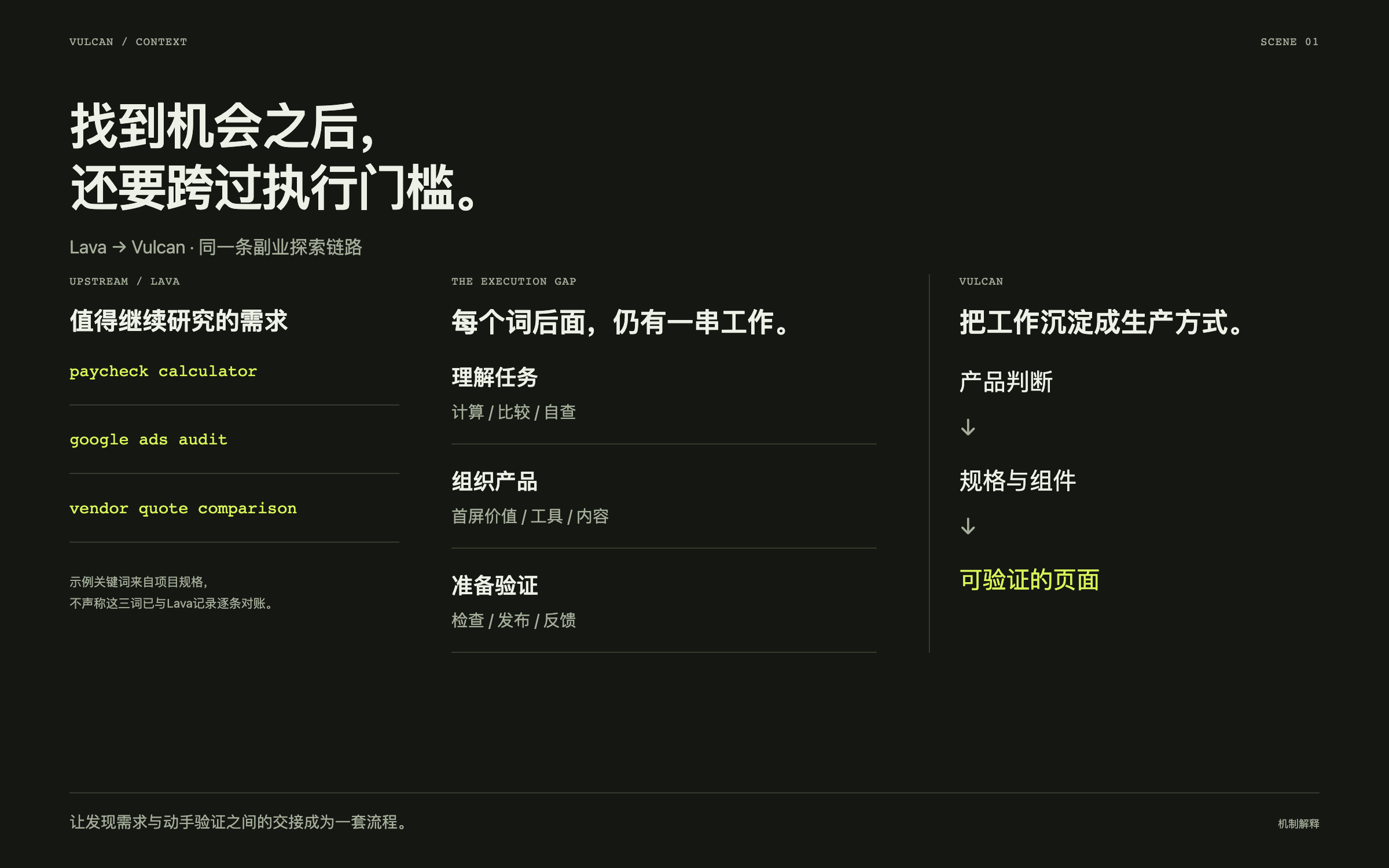
Lava asks which needs deserve investigation. Vulcan asks how to turn those needs into something people can try. A keyword is only the starting point: the user may need to calculate, compare, generate, or self-assess. The page must organize immediate value, supporting content, and feedback around that task. Vulcan connects demand exploration with product production.
Page specifications and components
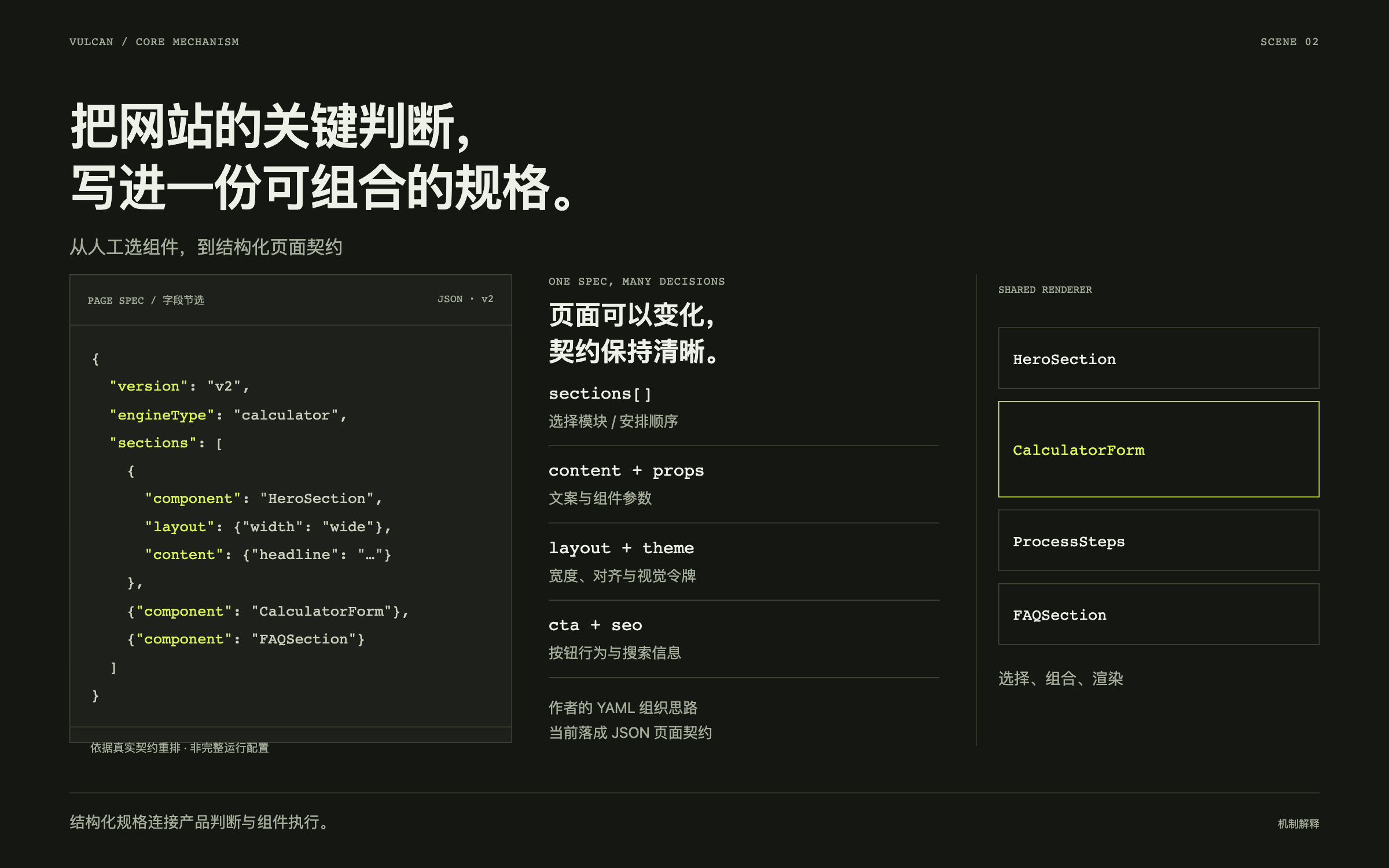
From choosing components manually to a structured page contract.
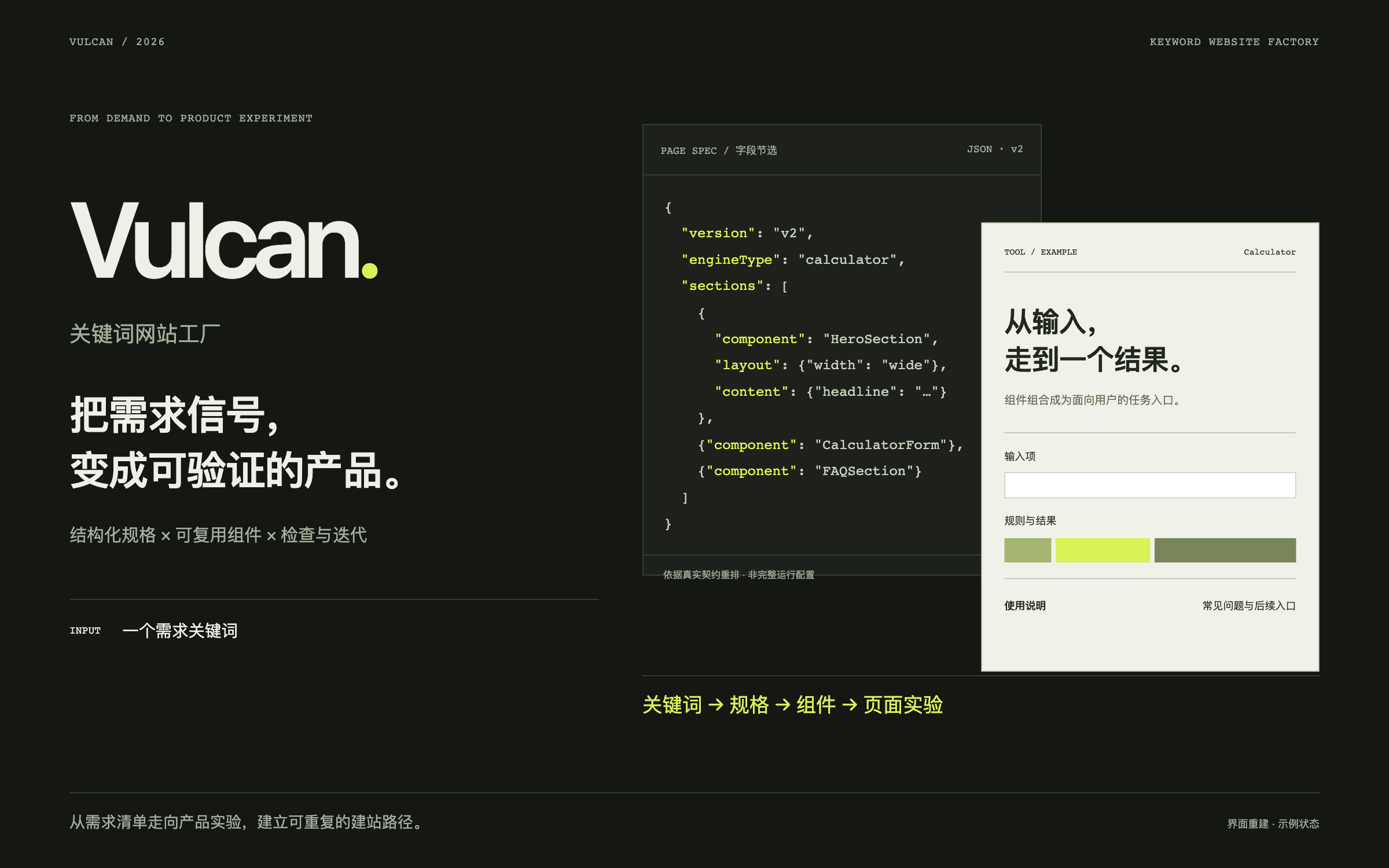
My initial approach described a website through YAML: AI would interpret the keyword and organize content, components, and styles into a detailed configuration. The current implementation expresses that idea through the PageSchemaV2 JSON contract. Content, layout, component parameters, buttons, theme, and SEO can be configured separately and read by a shared renderer; standard page changes can begin in the specification.
Defining the task on a page
Product archetypes guide the shared component system.
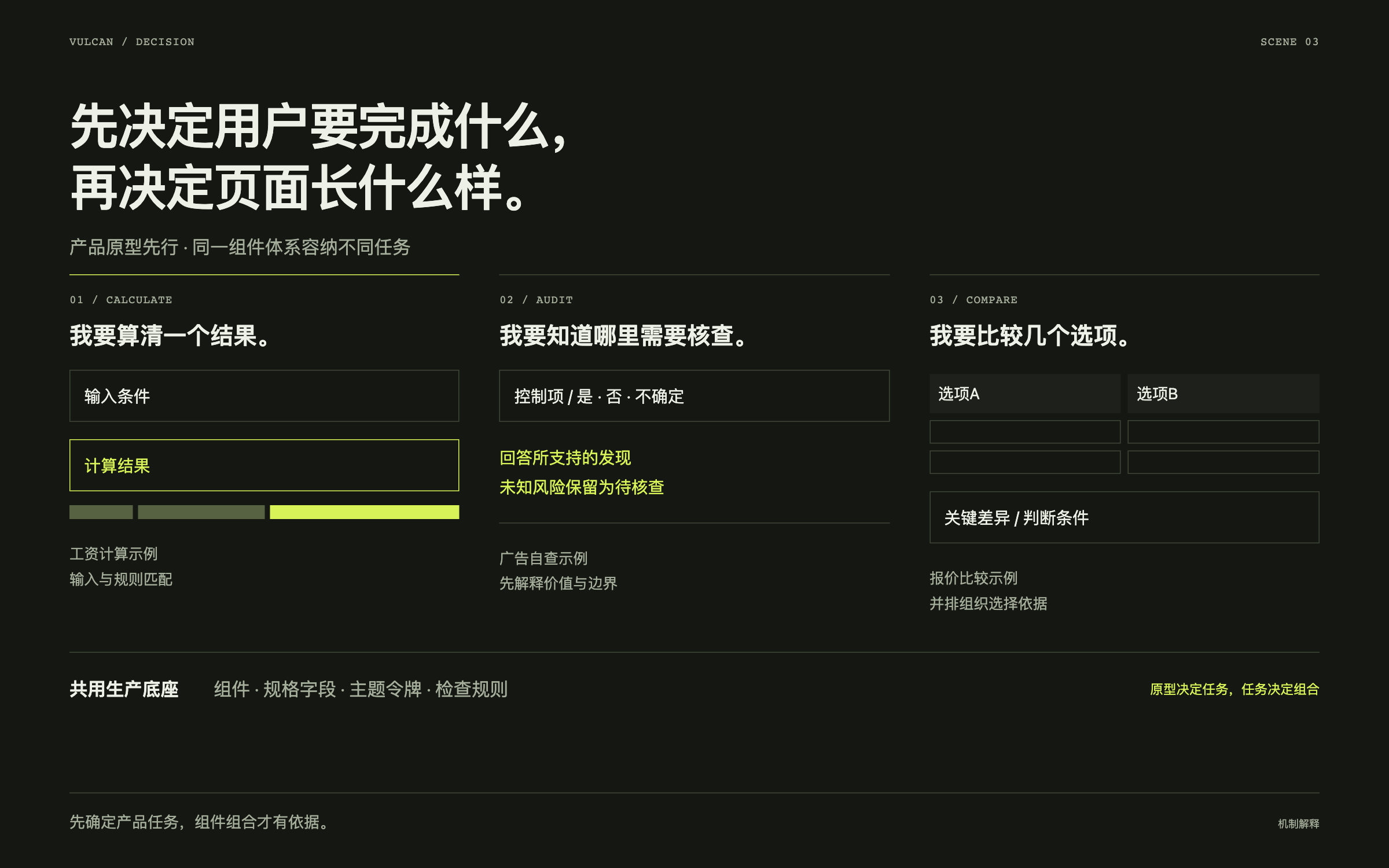
A salary calculator needs inputs and results, an advertising self-check needs questions and findings, and a quote comparison needs side-by-side choices. Archetype plans specify the opening, immediate value, required modules, and prohibited claims. Differentiation checks also constrain unexplained reuse of the same section order across different archetypes. Production capabilities are shared while each page follows its own task.
An entry point people can try
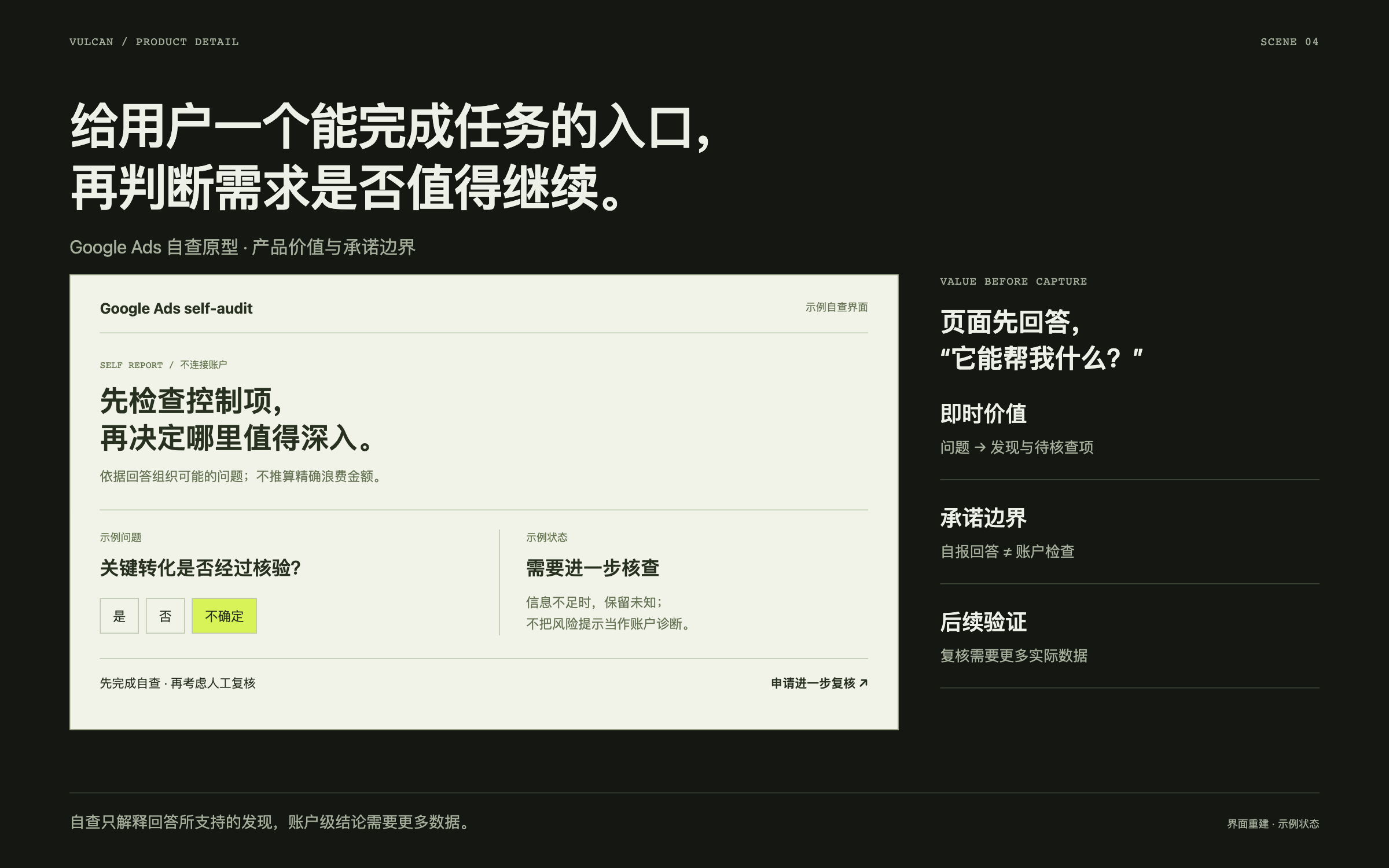
An advertising self-check prototype with explicit claim boundaries.
The advertising example uses self-reported answers: users respond to controls and receive rule-based findings and risks to inspect. Those answers do not establish that an advertising account was examined or support an exact waste estimate. The plan provides diagnostic value before offering a human-review entry point. Vulcan aims to produce usable demand-validation experiments; page count alone is a process measure.
Checks before publication
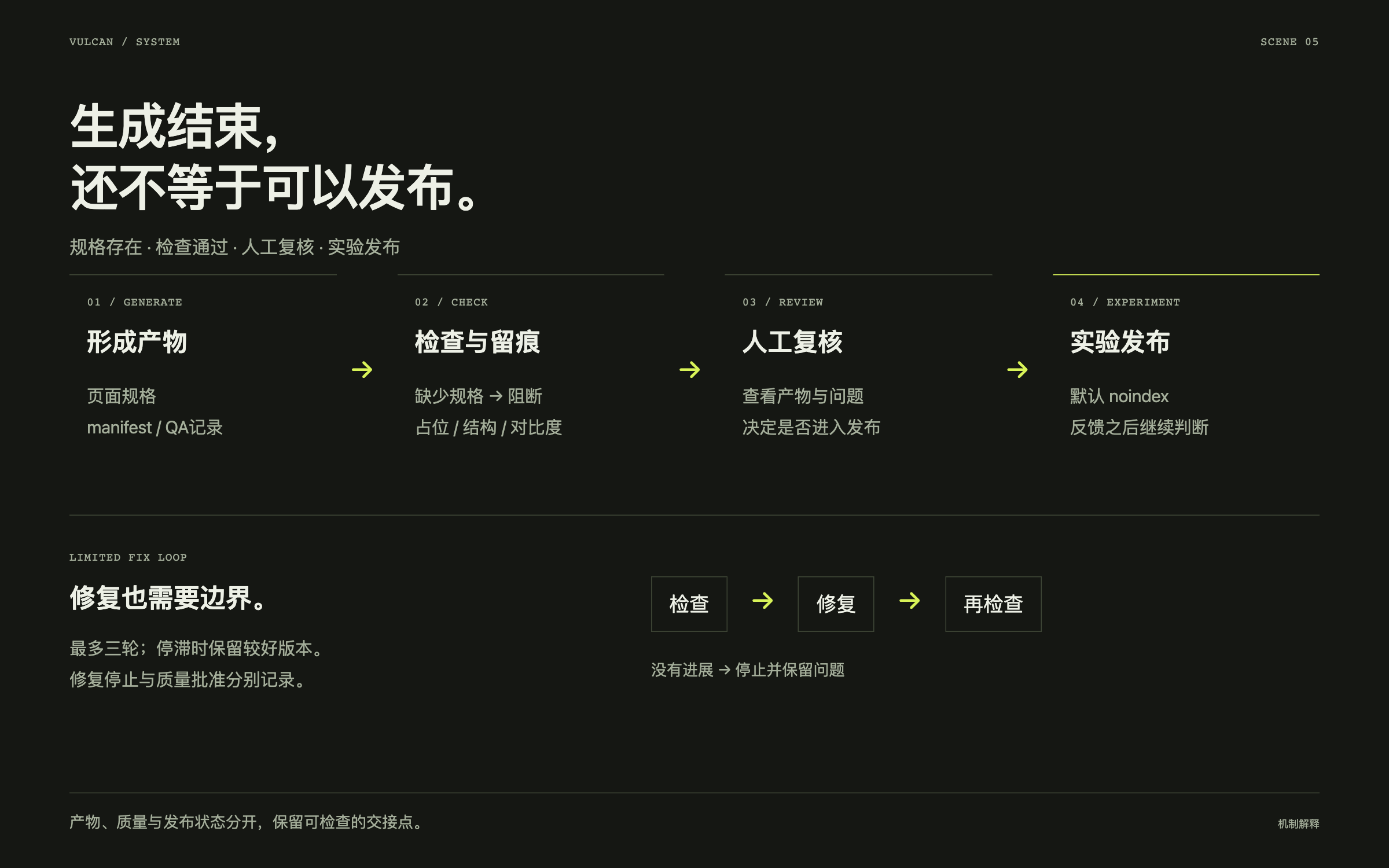
A saved specification · Checks · Human review · Experiment release.
Generated work must leave inspectable artifacts. The current pipeline saves specifications and QA records; a generation task reporting success cannot advance the candidate without a page specification. Repair loops have a round limit and retain the better version when progress stalls. Human review precedes experiment release, which defaults to noindex. Rendered behavior, factual claims, and tool results still require their own verification.
Reusing previous website work
Local artifacts from an evolving website factory.
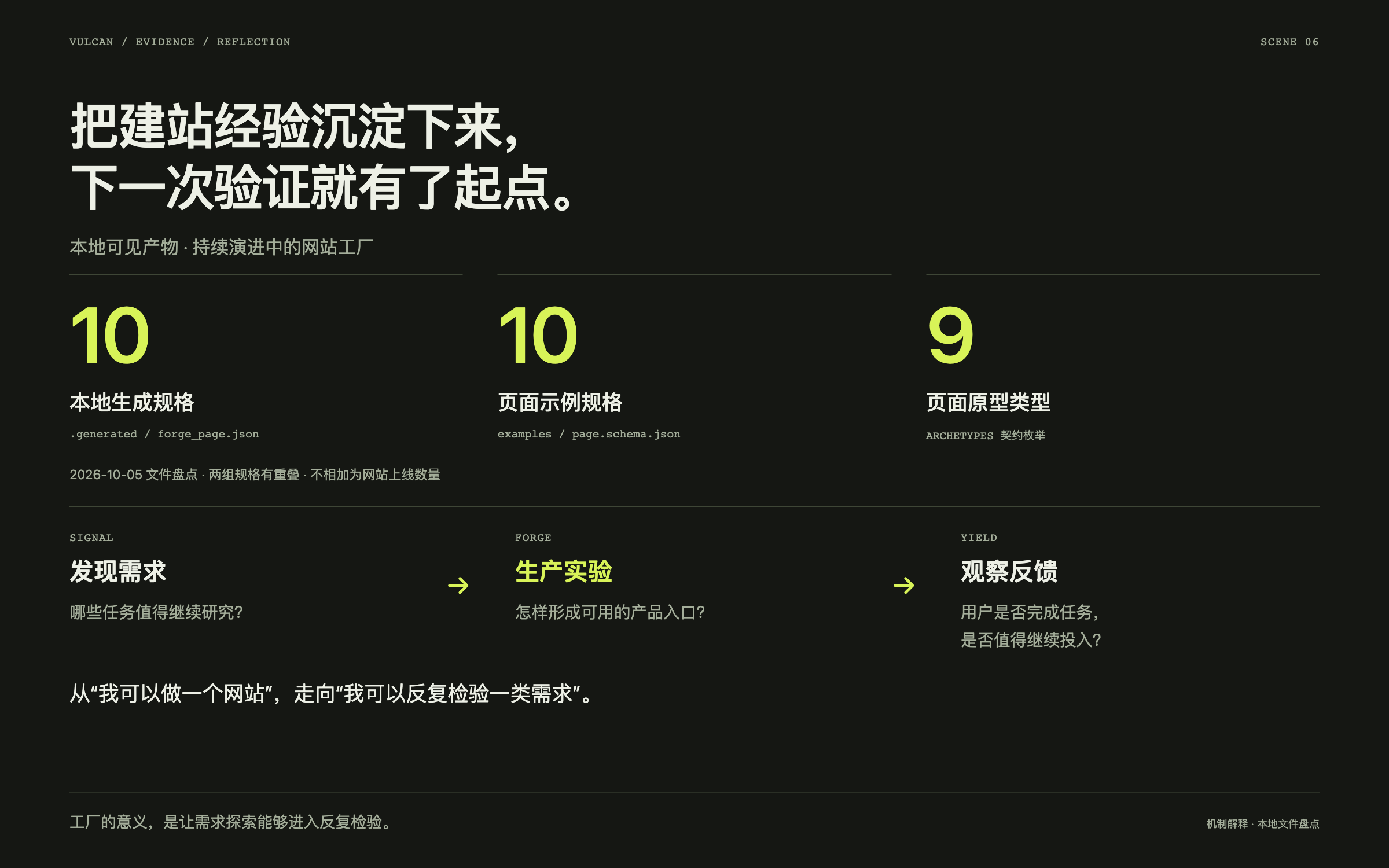
The repository contains 10 locally generated page specifications and 10 example specifications; the archetype contract defines nine task categories. These are distinct counts of engineering artifacts, showing reuse of specifications, components, and checks. Signal, Forge, and Yield express the discovery, production, and feedback direction. The continuing question is whether pages help users complete their tasks and whether observed usage warrants more investment.
My part
I initiated Vulcan for my side-project work, connecting Lava’s keyword candidates with demand interpretation, page specifications, component composition, checks, and release preparation. Prepared components provide reuse; AI helps form detailed specifications around a keyword. The current repository implements this approach with structured JSON page specifications.
Visuals are mechanism illustrations or interface reconstructions with example specifications, states, and questions. Local file counts do not represent deployed sites, users, or commercial outcomes.